Your father’s first Christmas

I wrote this piece as a Christmas present for my nephew in 2004.

This is your first Christmas, Sean, and since you’re only eight months old, I know this story might not impress you much, but it seems like the right time to tell it.

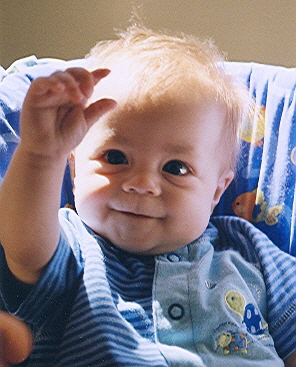
Your father was not quite three months old on his first Christmas, and I was ten years old. I knew enough about babies to know they don’t really do much at first, but eventually they grow into real people. That was the exciting puzzle. What was this new baby brother going to be like? We didn’t have many clues, but we watched for them all the time. Who was Louis Peter Burke?

Your Grandmother Burke died well before you were born, so you don’t know much about her. Here is her Christmas tree decorating theory: More is better. In architectural terms, it was rococo baroque.

During Christmas Eve day, we decorated the tree. First the lights went on — big lights, small lights, steady lights, twinkle lights, colored lights, white lights, all the lights we had, and there were plenty. Second, we hung every single ornament we had on the tree, and, again, there were plenty. If one was ugly or beat up, it went way in the inside where it could add color or sparkle without really being visible. The only rule was smaller stuff on top, bigger stuff on the bottom. Finally, we added tinsel and garlands of various types and colors to be sure there was maximum sparkle.

Then we waited for nightfall, since only a darkened house could do justice to the masterpiece we had created.

Meanwhile, we dressed your father in a red-and-white-striped elf-costume pajama set that an aunt had given him, complete with a pointy cap. He didn’t care for the cap but we made him wear it anyway, at least long enough for a photo, which may still be around somewhere. He looked more silly than elfish. He certainly had no idea about what was going on. He was too little to understand much of anything.

The moment to light the tree arrived. We turned out all the lamps and closed the front curtains to block the streetlight. With a flip of a switch, the tree flashed on, providing enough sparkling light to read by.

Your father’s eyes got big and he couldn’t take them off the tree. He liked it! He liked it a lot! Even when we turned the room lights back on, he continued to stare at the tree, fascinated.

It was a clue, the first clue I remember, about your father’s personality. He liked colorful, beautiful things — at least, we thought the tree was beautiful, and in a rococo way, it certainly was. We lit the tree for him throughout the holidays for the sheer fun of watching him enjoy it.

I don’t remember much else about that Christmas, like what I got as presents, what anyone else got, whether there was snow, or what we had for Christmas dinner. All I remember is the intense look of surprise and delight on your father’s little face, and how merry a Christmas he made it for all of us because we could make him happy, and because we had learned a little bit about him.

Finding out who someone is takes a long time. I’m still learning things about my brother Louis. Fatherhood, for example, has revealed new aspects of his personality and interests. In the same delighted way that I first saw so many years ago, he could not be more curious and excited to learn about you. Who is Sean Patrick Burke?

This is your father’s first Christmas with you. I hope it is merry.

Copyright © 2004 by Sue Burke, all rights assigned to Sean Patrick Burke.
Don’t just say no

Rejections and fun don’t mix – except this one time.

I wrote a horror story about vampires and started sending it out. The story made the second cut in an anthology but not the final one. Oh, well. I sent it out again right away and got a response of “close, very close” from the editor. Not bad!

Then … the very next magazine rejected it with a note saying that it was “cruel and evil.” Evil? A vampire horror story? Isn’t that the point? I laughed about it with my writer friends, and for a while I was known as “the evil Sue Burke.”

The next magazine rejected it with (this was by snailmail) a preprinted note saying: “We celebrate your achievement!” Although the editors couldn’t take the story, the note said, they wanted me to know how proud they were of me for having written it and taken part in the furtherance of literature. Or something like that. I think they meant it because they dropped a sprinkle of confetti into the envelope — really cool confetti. I used it to decorate my desk lamp.

I kept sending the story out, got rejections both bland and encouraging, and on the 21st try, I found a magazine that loved it and took it. A few years later the story was even reprinted in an anthology. All’s well that ends well.

I learned four things from this adventure:

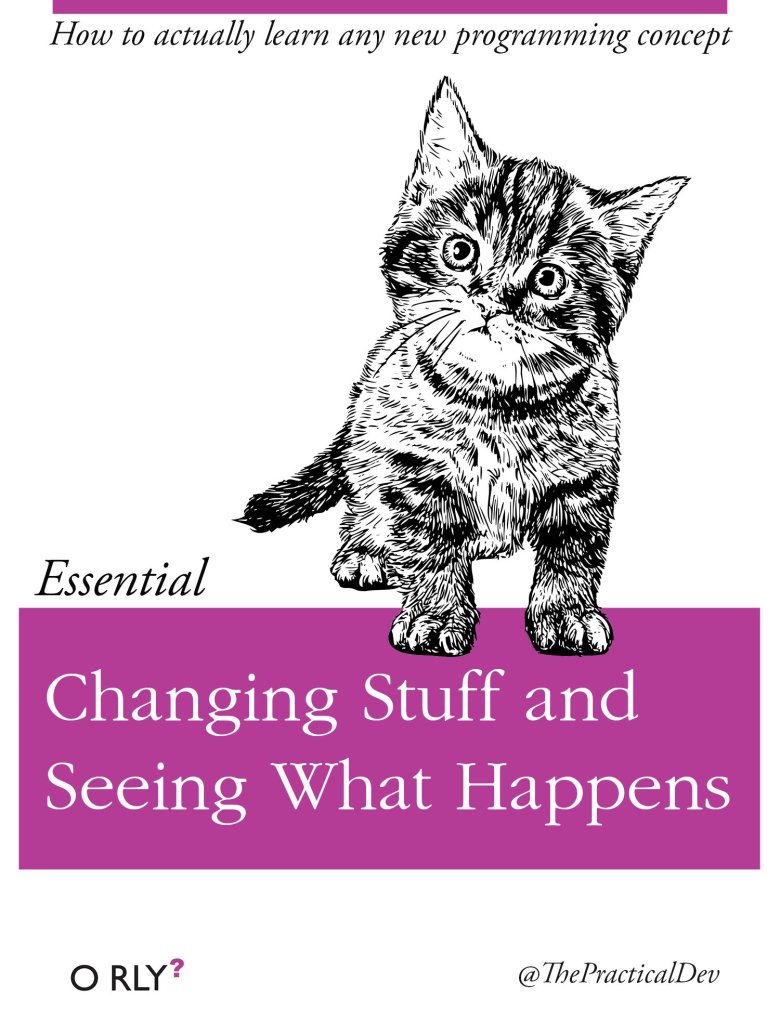
1. Confetti should accompany all rejections. Or, now that we send most things out via internet, a picture of a cute kitten. How hard would that be?

2. Rejections are about the story, not about the writer, which is too bad because I’d really like to be evil.

3. As we all know, rejections are a necessary step toward publication. We can even make a game out of them. I wish I could remember who I learned this from so I could give her credit: Try to see if you can achieve a certain number of rejections in a single day. She suggested five, so I made that my goal. The most I’ve ever gotten is three.

4. I need more rejections if I’m ever going to win the rejection game, which means I have to get more submissions out there. So, if you’ll excuse me, I’m going to go write something, and as a parting gift, here’s a picture of a cute kitten. Celebrate your next rejection with it. We all deserve a little fun.

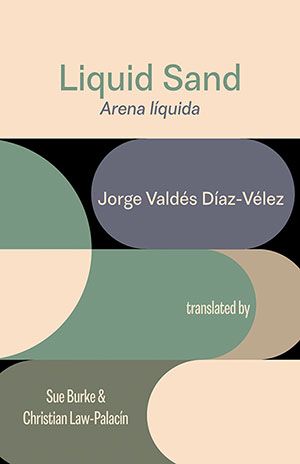
‘Arena Líquida / Liquid Sand’ by Jorge Valdés Díaz-Vélez, translated by Sue Burke and Christian Law-Palacín

I translated the poems in Liquid Sand / Arena Líquida with my Spanish friend Christian. One of us would draft the translation of a poem, then we would pass it back and forth, debating words, lines, and meaning — the goal of a translation is always to maintain the meaning. We didn’t quibble much. Translation is easiest when the original work is well-written.

In the opening poem, “Nadie / No One,” Ulysses returns to Ithaca to become a specter among his own memories. While there’s no way to summarize a collection of 42 poems, the theme of time occurs often. Time moves, and we move, but in different directions for different reasons, as the poem “Negro Sol / Black Sun” says:

The afternoon weighs heavily
toward its settlement. Ours
is due to a harder sun
and we have had to learn
to walk beneath its burden.

Liquid Sand / Arena Líquida is the first major bilingual collection of poems by Jorge Valdés Díaz-Vélez, one of Mexico’s most respected contemporary poets. Published this month by Shearsman Books and available from most bookstores, it gathers works by Valdés Díaz-Vélez selected from six previous collections that span more than two decades of writing.

Madrid Review Magazine says:

“In these pages, Valdés Díaz-Vélez explores time, memory, and the fragile equilibrium between movement and stillness. His poems evoke the physical and emotional geographies of the Americas while questioning belonging, transformation, and endurance. The English versions retain the clarity and meditative strength of the originals, inviting readers to cross the line between two languages and two sensibilities. To read Liquid Sand / Arena Líquida is to encounter poetry that is precise, reflective, and alert to the unseen rhythms of contemporary life. It is a landmark publication for readers of bilingual and Latin American literature.”

Why I don’t use AI

Clanker

I don’t use AI because I’m lazy.

My job as a writer and translator is to produce excellence. Let me use translation as an example of how AI creates extra work because it’s easy to explain, and I really am lazy.

You may know that an AI can produce a translation that might be passably correct, although it will sound “off” in certain ways. I could use that as a first draft and fix it, right?

Sure. But it’s faster and easier to do it right the first time. If I fix an AI first draft, I have to go over every single word just as if I were translating it on my own, sometimes reviewing it several times, to drag it into excellence. Fixing AI slop is like flying from Chicago to New York and changing planes in Miami. I prefer a direct flight. I also prefer airplane pilots who have not ingested hallucinogens.

I’ve been writing professionally for more than a half century, and I’ve learned how to do a lot of things because I’ve done them uncounted times, but I still learn something new every single time I write anything. Using an AI would be like sending someone to the gym for me. I wouldn’t get stronger. Although I am lazy, I will work hard at writing because that’s how I pay the rent — and because I enjoy writing so much that I want to excel.

Striving for excellence is satisfying. Look at the faces of sweaty athletes on the field during a game. They’re having the time of their lives.

***

Rant over. If you want further rants, here are some curated links:

AI Killed My Job: Translators – by Brian Merchant

The Value of Human Translation – American Translators Association

Best Translation Apps: A Translator Puts Four to the Test – American Translators Association

Humans are being hired to make AI slop look less sloppy – NBC News

As AI Gets Smarter, It Acts More Evil – by Ted Gioia

Time to Play … !! SPOT THE BOT !! – Writer Unboxed

AI Spam – The Encyclopedia of Science Fiction

Criticism in the Age of AI – by Lincoln Michel

Artificial Intelligence and Ethics – Delancyplace

Word of the week: Clanker – by Nancy Friedman – Fritinancy

The Internet Is Turning You Into Someone You’d Hate IRL – WebMD

Could AI Data Centers Drain Lake Michigan? – The Block Club Chicago Podcast

“En Paz” — two translations

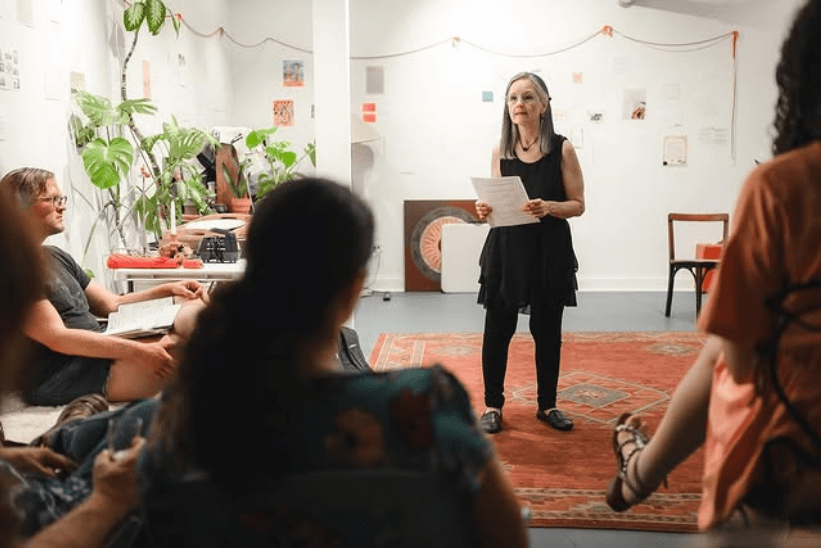
Because “En Paz” is my husband’s favorite poem, I read it at a recent open mic here in Chicago, along with my two translations. The poem is by Amado Nervo, a Mexican poet, and it’s one of his most beloved poems, published in 1916.

My first translation aimed at keeping the meter and rhyme of the original poem. Then I thought it might be a bit sing-song, and I had to force a few meanings to make it rhyme, so I made a second translation that hewed close to the original. At the reading, people had mixed opinions about which one they preferred. How about you?

En paz

Muy cerca de mi ocaso, yo te bendigo, vida,
porque nunca me diste ni esperanza fallida,
ni trabajos injustos, ni pena inmerecida;

porque veo al final de mi rudo camino
que yo fui el arquitecto de mi propio destino;

que si extraje la miel o la hiel de las cosas,
fue porque en ellas puse hiel o mieles sabrosas:
cuando planté rosales, coseché siempre rosas.

…Cierto, a mis lozanías va a seguir el invierno:
¡mas tú no me dijiste que mayo fuese eterno!

Hallé sin duda largas las noches de mis penas;
mas no me prometiste tú sólo noches buenas;
y en cambio tuve algunas santamente serenas...

Amé, fui amado, el sol acarició mi faz.
¡Vida, nada me debes! ¡Vida, estamos en paz!


At Peace

So close now to my sunset, life, I bless you,
you never gave me hopes that were untrue,
nor unjust labor, nor suffering undue;

at the end of my rough road I see
I was architect of my destiny;

Wherever I put ice in things, they froze,
when I wanted honey, its sweets I chose:
my rosebushes always grew me a rose.

…True, winter will follow my endeavor:
but you never said springtime was forever!

Indeed, I spent some long nights lost in woe;
but you never pledged just comfort to bestow;
and yet some nights I thrilled beneath moonglow…

I loved, was loved, in sunshine found release.
Life, you owe me nothing. Life, we are at peace!


At Peace

Very close to my sunset, I bless you, life,
because you never gave me false hope,
nor unjust troubles, nor undeserved blame;

because I see at the end of my hard path
that I was architect of my own destiny;

that if I took honey or ice from things,
it was because I put ice or delicious honey in them:
when I planted rose bushes, I always harvested roses.

…True, my youth will be followed by winter:
but you never told me May would last eternal!

I encountered of course some long nights of sorrows;
but you never promised me only good nights;
and on the other hand, I had some sacredly serene…

I loved, was loved, and the sun caressed my face.
Life, you owe me nothing! Life, we are at peace!