When ‘squirrel’ means ‘strikebreaker’

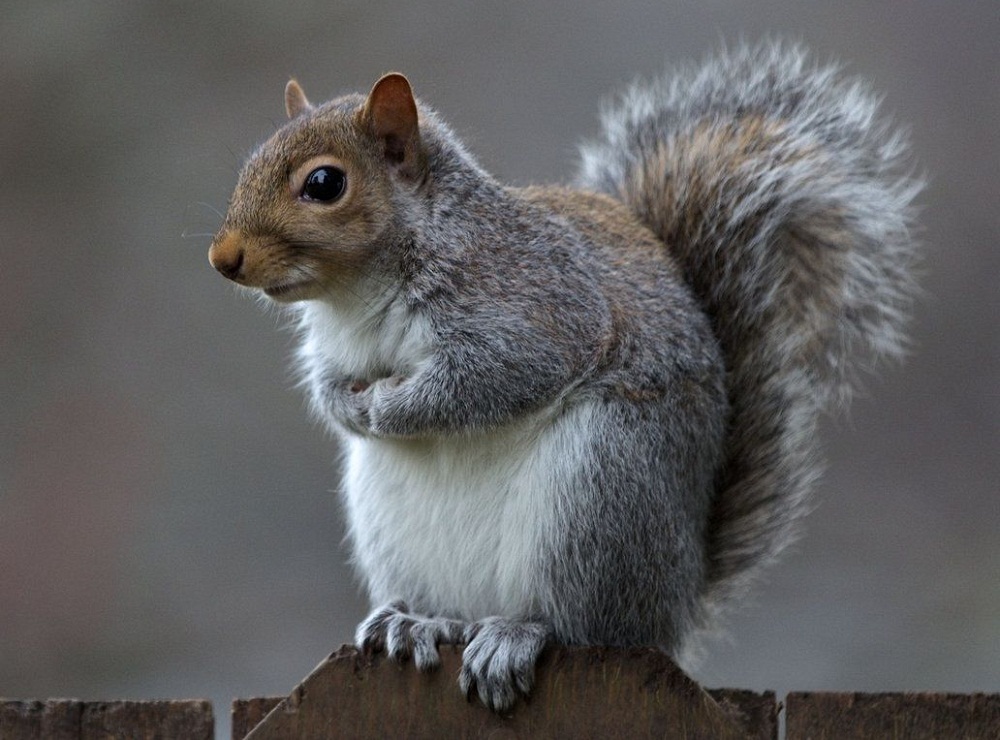
The Spanish word esquirol looks like the English word “squirrel,” but that’s not what it means. The name for the animal in Spain is ardilla, which comes from an old Iberian language word. In Spanish, esquirol means “strikebreaker.”

Here’s what happened: In Catalonia, in eastern Spain, the word in the Catalan language for the animal is esquirol, which comes from the Latin sciurus, which comes from the Greek skiouros. The English word shares the same root.

Toward the end of the 19th century, in a town near Barcelona named Santa Maria de Corcó, an inn had a pet squirrel in a cage at its entrance. Eventually the town began to be called “L’Esquirol” after the Inn of the Squirrel.

In 1902, 1908, and 1917, textile workers in the nearby towns went on strike, and workers from L’Esquirol offered to work in place of the strikers. So “strikebreaker” became esquirol — a term of disrespect, like scab in English.

That’s how the Latin-based word for “squirrel” finally entered the Spanish language. But the term has no connection with the cute little animal except for that minor historical accident.

When words travel from one language to another, they don’t always arrive safely.

Squirrels themselves are concerned about their own safety. Urban squirrels seem to believe that they’re safer close to noisy streets, even though they might become roadkill, because cars scare away their predators.

Here in Chicago and many parts of the United States, the animal that symbolizes a strikebreaker is a rat, specifically a rat named Scabby. The giant inflatable rat, often used by labor unions in street protests, is protected by free speech laws.

Chicago’s actual rats are preyed on by our urban coyote population, which traveled from the countryside to our streets, and we’re glad to have them.

Spain’s word of the year, which you weren’t taught in school: dana

Photo of a street filled with cars washed up and destroyed in a flood.

English-language dictionaries and various wordniks have picked their words of 2024, including demure, kakistocracy, enshittification, brat, brain rot, Colesworth, manifest, and polarization.

In Spain, the Fundación del Español Urgente (Foundation for Urgent Spanish) was created by the Spanish Royal Academy and EFE, a news agency, to provide guidance for terminology used in the news media that might pose problems in grammar, meaning, or spelling. It also chooses a word of the year. This year the word is: dana.

Even if you know Spanish, you may have never heard of this word. It’s fairly new, formed by the acronym for depresión aislada in niveles altos (isolated depression at high levels). The World Meteorological Organization explains that it “often occurs during the autumn season because the remaining warm surface heat from summer meets a sudden cold invasion aloft from the polar regions. This leads to what meteorologists used to call ‘a cut-off system’ with low-pressure values that persist over a few days and rotating over the concerned region.” Warm air saturated with moisture meets cold air and becomes an intense, long-lasting storm.

In Valencia at the end of October, the result was devastating rainfall and horrific flash floods. More than 200 people died amid massive damage. There were big political consequences. Dana is Spain’s word of the year because of its importance.

Other candidates for Spain’s word of the year can tell us more about the year that was in that corner of the globe:

Fango (mud or slime): what the victims of the dana had to clean up — and what they hurled at politicians.

Inquiokupa: renters of apartments or homes who stop paying the rent intentionally and refuse to move out. Spain has a housing crisis, too. This, like dana, is a neologism.

Micropiso (micro-apartment): another newish housing-crisis word.

Mena: an acronym for menores extranjeros no acompañados (unaccompanied foreign minors), a newish term because Spain has immigration issues, too.

Narcolancha (narco-speedboat): a newish word invented because Spain has a drug-smuggling problem, too.

Pellet (pellet, also called nurdle in English): a word imported from English to describe the millions of tiny balls of raw-material plastic that washed up on Spain’s west coast in January.

Alucinación (hallucination): errors invented by AIs; as in English, a new meaning has been attached to an existing term.

Gordofobia (fat-fobia): a newish word for a world-wide phenomenon.

Reduflación (shrinkflation): another new word for what happens when the price stays the same but the product becomes smaller, another world-wide phenomenon.

Turistificación (touristification): a problem in many places, including Spain, especially Barcelona.

Woke (woke): another word imported from English, but it’s pronounced with two syllables, WOH-kay.