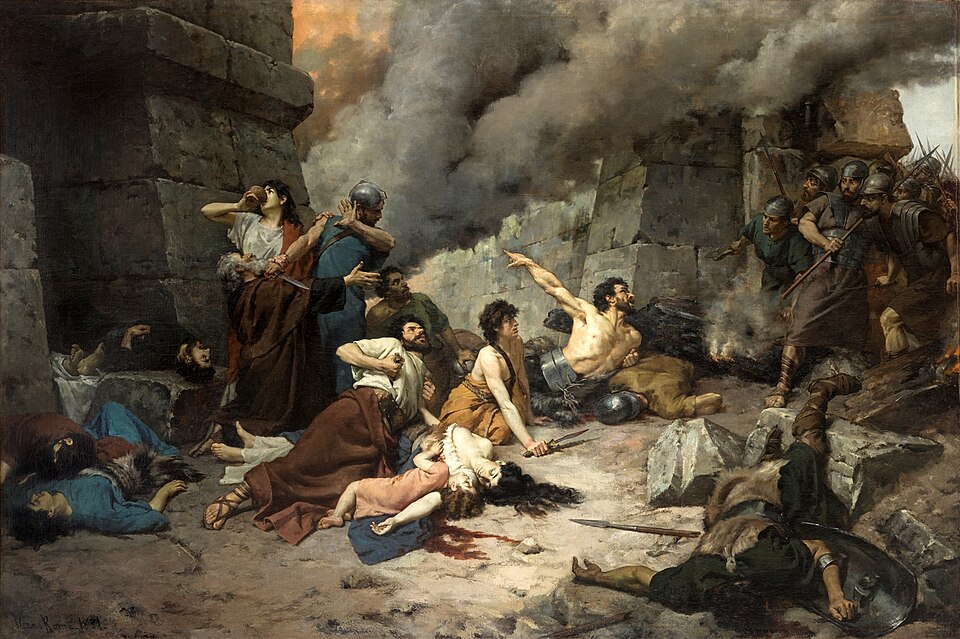
Today, September 30, is International Translation Day. I’ve been working for a while on a translation project: a play by Miguel de Cervantes called Numancia (Numantia in English). It has never been performed in English, so you may not have heard about it, although it’s considered a masterpiece in Spain.
Along with some theater-wise partners, I’m trying to get the play staged here in Chicago.
Cervantes’ play is based on a real historical event. A city in north-central Spain called Numantia was conquered by the Roman general Scipio Aemilianus Africanus in 133 BCE. The Celtiberian city had long been a rebel stronghold, resisting successive attempts over decades. Scipio conquered it only after a long siege that reduced its inhabitants to starvation. However, the people of Numantia committed mass suicide rather than surrender and be taken as slaves, depriving him of his triumph.
This excerpt from my translation comes from the first scene of the play, in which the Numantines seek peace.
***
NUMANTINE AMBASSADOR: As a citizen of Numantia, I have been sent to you, great general, the most mighty captain of Rome ever hidden by night’s darkness or beheld in daylight, to extend a hand in friendship, sir, as a sign to end this cruel and stubborn war that has lasted for so many years and caused much harm to ourselves and to you.
Numantia pledges to obey all laws and codes of the Roman Senate as long as it will not suffer further outrages and affronts from any of Rome’s consuls and governors. Their harsh rule and excessive greed in the past placed such a great yoke on our necks that we were forced to rebel against them and their law.
Throughout this long dispute between both our sides, we have never found any general with whom we could forge an accord. However, now fate has brought our ship to this fine port, and we will lower our sails and prepare to seek whatever agreement we may reach.
Do not think we come out of fear to insist on peace, for long experience has tested the worthy power of Numantia. Your virtue and valor have caused us to declare that peace would be a greater gain than war, and that we would wish to have you, sir, as friend and lord.
This is why we have come. We await whatever you may be pleased to reply.
SCIPIO: You are late to show repentance! Your friendship would give me little satisfaction. Show your strength at arms again, because I wish to see what my weapons can do. Perhaps fate will bring us glory and you a tomb. All your insolence, for so many years, cannot be repaid by asking for peace. War will continue, its danger renewed. Troops will again be on the move.
NUMANTINE AMBASSADOR: False confidence brings upon itself all kinds of mistakes. Be careful what you do, sir, for your arrogance will be repaid by our strength at arms. By refusing peace, which we sought with good intentions, you give us just cause, and the heavens shall be the final judge over who is right. Before you set foot in Numantia, you will taste the angry might of those who wished to be your vassal and faithful friend but must be your enemy.
SCIPIO: Have you anything more to say?
NUMANTINE AMBASSADOR: No, but we have more to do, since you, sir, wish it so. You do not accept the friendship we offer, which reflects poorly on who you are. But you will see what we can do when you show us what you can do. It is one thing to negotiate for peace, and another to break through the lines of armed soldiers.
SCIPIO: You speak the truth, and I can speak of both peace and war, but I do not wish you as friends. This will never happen here. And with that, you may go.

