My ranking of the Hugo Award for Best Short Story

This year’s Hugo Awards will be presented at the World Science Fiction Convention, LAcon V in Anaheim, California, USA, on August 30, 2026

I’ve read all the short fiction finalists, which has some overlap with the Nebula finalists. This is my ranking of the short stories — but there are other opinions, too. I wouldn’t mind if any of my top four stories won the award. Overall, I thought this year’s finalists represent a good overview of the current field with its strengths and faults.

6. “Laser Eyes Ain’t Everything” by Effie Seiberg (Diabolical Plots, May 16, 2025) — A woman who uses a wheelchair discovers that superpowers will not overcome indifference to accessibility needs. Although the story won this year’s Nebula Award, I think it’s almost a rant and adds no nuance to ongoing concerns about accessibility.

5. “Missing Helen” by Tia Tashiro (Clarkesworld, Issue 226) — Slim SFnal thread but deep characterization. A woman and her clone meet in adversarial circumstances, although I wonder how the narrator knew all those things.

4. “In My Country” by Thomas Ha (Clarkesworld, Issue 223) — In a strange country, people are permitted by law to speak plainly or not at all. This story is sort of a parable, and its telling is not plain, and it holds a lot of unspoken but deeply felt feelings.

3. “10 Visions of the Future; or, Self-Care for the End of Days” by Samantha Mills (Uncanny Magazine, Issue 63) — In the end, this is a very short love story, or rather a story about how love can endure along with survival. Grim and yet humane.

2. “Wire Mother” by Isabel J. Kim (Clarkesworld, Issue 229) — A teenage girl is blamed because she cannot love AI “people.” She can sense the harm they’re doing to her world, but she has little means besides her own fury to fight back. A close second.

1. “Six People to Revise You” by J.R. Dawson (Uncanny Magazine, Issue 62) — Liza is sure she needs to change to find peace because a corporation is persuasively selling its services for change to vulnerable, anxious people. But what to change and why? This was also my choice for the Nebula Short Story Award. The story may be a hard to understand at first because Liza is self-deluded, a truly unreliable narrator who reflects our times where ads and influencers try to convince people they are sick when they are not.
Goodreads review: ‘Electromagnetic Assault’ by Bruce Landay

Electromagnetic AssaultElectromagnetic Assault by Bruce Landay
My rating: 5 of 5 stars

If you like futuristic military techno-thrillers, you’ll probably like this book.
Do I need to say more? Let’s consider the many varieties of book reviews including consumer, preview, sponsored, literary, professional, and academic.
In this case I’m a reader (or consumer, if you prefer that term, which I don’t). This is a preview because the book will be released April 7 (although you can pre-order it). It’s almost sponsored because I know Bruce and critiqued earlier versions of the opening chapters, and he sent me a free copy of the final book, but I’m writing this review because I want to give my honest opinion.
Tips on how to write a review usually recommend writing a summary of the book. To my thinking, this habit largely results from an unexamined hangover from middle school book reports when you had to summarize a book to prove to the teacher that you actually read it, no matter how tedious your summary was (and is). We’re adults now, and we have all the tedium we need. You can just read the book blurb, which is blissfully brief.
A critical assessment is also recommended for a review. In this Electromagnetic Assault, bullets fly around and things blow up a lot. For this reason, I found the battle that takes place in my old neighborhood in Milwaukee especially entertaining. There are endless plot twists, as befits a book of this type. To say more would spoil your fun. So much for my summary and assessment.
The reviewer is also advised to mention relevant information about the author. Bruce is a former Air Force officer. You will notice the expertise.
More broadly, I think there three types of book reviews:
• The first is for readers who haven’t read the book but wonder if they want to. That’s what we’re doing here.
• The second is for readers who aren’t going to read the book but want a useful, thoughtful summary from a professional so they can feel like they’ve read the book. The review provides a lengthy non-tedious analysis. You can often read these in upscale magazines and academic settings, which is not where we are now.
• The third kind of review subjects the novel to literary criticism regarding its writing style and thematic development. I think the very short chapters add to the velocity of the book, which is an appropriate attribute for a thriller. To discuss its literary merits further, we would both need to have read the book, and so far only one of us has.
To conclude, I believe Electromagnetic Assault is a worthy addition to its sub-genre. Enough said.


View all my reviews

Treasure, alien life, and ghosts

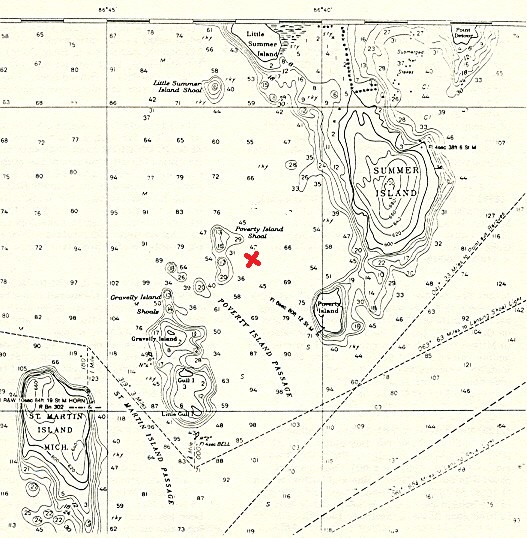
I know of two supposed sunken treasures of gold in Wisconsin, one in Lake Michigan and one in Lake Mendota, both dating back to the Civil War. I’ve researched the one in Lake Michigan and even have the treasure map which locates the gold near Poverty Island Shoal at the tip of Door Peninsula, but I haven’t decided to go hunt for it. I don’t think these treasures exist.

What interests me is why these stories stay alive. Lies are common as leaves in a forest, so why keep certain ones?

First, there’s a simple wish for sudden wealth, the motive force behind lotteries.

Second, legends often say that treasures, buried or sunken, are guarded by leprechauns, mermaids, or at least a curse — by beings alien and magic to our existence. It’s a wish for a livelier universe. In the same way, some of us hope for life on Mars or Andromeda, which would also be a real treasure.

Third, it’s a wish to preserve and honor the past by keeping stories alive. Ghosts work the same way. I met a woman whose neighbors told her the troubled presence she noticed on the stairway of the house she’d just bought was of a teenager who had committed suicide some 50 years earlier because he was gay. She hung a gay pride poster in the stairway to soothe him, and it seemed to work.

Most importantly, treasure is real. Sometimes — at Troy and in the Caribbean — gold is found, and then our wishes are confirmed. I can see Mars at night, and I might be watching Martians. If there are ghosts, I have visited haunted houses. When I lived in Milwaukee, someone else in that city named Susan Burke (not me) won the Supercash lottery. Riches await, if we keep searching.

X marks the spot.

Works eligible for awards

Here are some things published in 2025 that you may wish to consider nominating for an award — just a reminder. Some are my own works, some are my translations.

Science fiction and fantasy short stories by me

“To Defeat Water” Short story, 1175 words. If you curse Poseidon, he might curse you, too, time and time again. And life after life, you can fight back. Read it here: The Lorelei Signal, July 2025.

“Journey to Apollodorus” Novelette, 8760 words. In my novel Dual Memory, an AI named Par Augustus discovers a story about robots in the Apollodorus Crater on Mercury. This is the story. It focuses on the humans who struggle to create and maintain a scientific team when a lander sent to Mercury behaves unexpectedly. Success can be as stressful as failure. Oxygen Leaks Magazine, March 2025 (no longer in publication, contact me for a copy).

Novella translation

ChloroPhilia by Cristina Jurado. Translation of a novella, 20,200 words. Would you sacrifice your humanity to save the world? Nominated for Spain’s Ignotus Award, this strange coming-of-age story addresses life after an environmental disaster, collective madness, and sacrifices made for the greater good. Buy it here: Apex Books, January 2025.

Science fiction short story translations

“Trees at Night” by Ramiro Sanchiz. Translation of a short story, 6050 words. A librarian at a hospital-like sanatorium befriends a young patient named Federico for reasons that eventually become clear. Read it here: Clarkesworld Science Fiction and Fantasy Magazine, November 2025.

“Proxima One” by Caryanna Reuven. Translation of a short story, 4020 words. A machine intelligence called Proxima One sends probes into the galaxy on long journeys filled with waiting and yearning in a search for intelligent life. The probes cope with unexpected wonders, loss, and profound changes — but there is always possibility and hope. Read it here: Clarkesworld Science Fiction and Fantasy Magazine, May 2025.

“Bodyhoppers” by Rocío Vega. Translation of a short story, 5290 words. Minds can hop from body to body, but there’s always a problem because the system is designed to create them. One day, you can’t return to your own body because it’s occupied by someone with more money. Now you have no home, and you’re still madly in love. Clarkesworld Science Fiction and Fantasy Magazine, February 2025.

Poetry translation

Liquid Sand / Arena Líquida by Jorge Valdés Díaz-Vélez. Book of poetry translated by Christian Law Palacín and myself. This is the first major bilingual collection of poems by Jorge Valdés Díaz-Vélez, one of Mexico’s most respected contemporary poets. It gathers 42 of his works selected from six previous collections that span more than two decades of writing. Shearsman Books, November 2025.

My votes for the Hugo Short Story Award

This year’s Hugo Awards will be presented at the Seattle Worldcon on Saturday evening, August 16. The short story category, as usual, has some overlap with this year’s Nebula Awards, and if you read no other short fiction, I recommend reading the nominated stories. You’ll come away with an excellent panorama of where the field is today.

Here are my votes, and I based them on the storytelling risks and successes. You may very reasonably have different criteria and choices.

6. “Marginalia” by Mary Robinette Kowal (Uncanny Magazine, Issue 56) — The story is based on drawings of knights fighting snails in medieval manuscript margins, which is a charming inspiration: What if knights really fought snails? A struggling family joins with their lord in a fight to the death. The story wraps up too neatly for me, so it comes in sixth, but other Hugo voters loved it.

5. “Five Views of the Planet Tartarus” by Rachael K. Jones (Lightspeed Magazine, January 2024: Issue 164) — This is flash fiction about the horrors faced by those found guilty of treason, with an ennobling, subversive twist. I especially like that very short fiction has found its way onto the ballot.

4. “Stitched to Skin Like Family Is” by Nghi Vo (Uncanny Magazine, Issue 57) — The magic contained in clothing leads a sister to her brother, then gives her power. Carefully and competently told, and Nghi Vo’s love of old (vintage?) clothes and their histories shines through.

3. “Three Faces of a Beheading” by Arkady Martine (Uncanny Magazine, Issue 58) — A convoluted story about complicity in a genocide told through multiple points of view in a multi-player RPG and mass storytelling. I admire the experimental style, even if it was confusing.

2. “We Will Teach You How to Read | We Will Teach You How to Read” by Caroline M. Yoachim (Lightspeed Magazine, May 2024: Issue 168) — A message is sent apparently to humans from a very different, brief-lived species: a simple message that holds entire lives. This is another experimental format, and it left me with a lot to think about.

1. “Why Don’t We Just Kill the Kid in the Omelas Hole” by Isabel J. Kim (Clarkesworld, February 2024) — I nominated this for the strength of the storytelling voice, and after reading all the finalists I still like it best: “… tell me there is a better solution than putting one single kid in the hole, and letting that one single kid have a miserable life, in return for the good lives of all of our children?” The story has already won the Nebula, Locus, and BSFA awards, and I think it’s a strong contender for the Hugo. It’s an update on the classic Ursula K. Le Guin story, which also won awards when it was published in 1974. A half-century later, even though our exact circumstances have changed, we still have to make tough moral choices.