My ranking of the Hugo Award for Best Short Story

This year’s Hugo Awards will be presented at the World Science Fiction Convention, LAcon V in Anaheim, California, USA, on August 30, 2026

I’ve read all the short fiction finalists, which has some overlap with the Nebula finalists. This is my ranking of the short stories — but there are other opinions, too. I wouldn’t mind if any of my top four stories won the award. Overall, I thought this year’s finalists represent a good overview of the current field with its strengths and faults.

6. “Laser Eyes Ain’t Everything” by Effie Seiberg (Diabolical Plots, May 16, 2025) — A woman who uses a wheelchair discovers that superpowers will not overcome indifference to accessibility needs. Although the story won this year’s Nebula Award, I think it’s almost a rant and adds no nuance to ongoing concerns about accessibility.

5. “Missing Helen” by Tia Tashiro (Clarkesworld, Issue 226) — Slim SFnal thread but deep characterization. A woman and her clone meet in adversarial circumstances, although I wonder how the narrator knew all those things.

4. “In My Country” by Thomas Ha (Clarkesworld, Issue 223) — In a strange country, people are permitted by law to speak plainly or not at all. This story is sort of a parable, and its telling is not plain, and it holds a lot of unspoken but deeply felt feelings.

3. “10 Visions of the Future; or, Self-Care for the End of Days” by Samantha Mills (Uncanny Magazine, Issue 63) — In the end, this is a very short love story, or rather a story about how love can endure along with survival. Grim and yet humane.

2. “Wire Mother” by Isabel J. Kim (Clarkesworld, Issue 229) — A teenage girl is blamed because she cannot love AI “people.” She can sense the harm they’re doing to her world, but she has little means besides her own fury to fight back. A close second.

1. “Six People to Revise You” by J.R. Dawson (Uncanny Magazine, Issue 62) — Liza is sure she needs to change to find peace because a corporation is persuasively selling its services for change to vulnerable, anxious people. But what to change and why? This was also my choice for the Nebula Short Story Award. The story may be a hard to understand at first because Liza is self-deluded, a truly unreliable narrator who reflects our times where ads and influencers try to convince people they are sick when they are not.
Magic Rules Zero Through Four

My favorite words are “but” and “what if.” One day I thought about the way the laws of thermodynamics begin with zero. What if magic had rules that started with zero, too? Our understanding of thermodynamics gives us great powers, but what powers would the rules of magic give us? My story offers one answer, but what if there are better answers? This flash fiction story was published at Daily Science Fiction in 2021.

***

Magic Rules Zero Through Four

by Sue Burke

Rule 0. Magic works. But few people believe in it.

A half-dozen students awaited their teacher in a secluded garden. The sorcerer, they thought, would be an elderly man with a long white beard and wise sad eyes. Instead a carefree young woman strolled in, wearing a fashionable hoop skirt, bell sleeves, and corseted waist. She hummed as she sat on a wicker bench.

Years later, you labor in the War Department in utter secrecy. If anyone asks, you manage a special procurement research project, which your coworkers believe is a cover for espionage. You never correct them.

***

Rule 1. The forces of the world will work in accord with magic. But they must be persuaded or beguiled.

“Magic is a matter of will.” Her voice warbled like birdsong. “Human beings are endowed with an enormous force of will. We live for our plans and desires.” The way she said desires made the entire class fall in love, or at least lust. Then she showed how she did that.

You’re not a spy, but your country has excellent spies. The enemy hopes to change the course of the war with an invasion. You know exactly when and at which section of the coast.

***

Rule 2. The past and present cannot be changed. But the future can, and the further into the future, the more easily it can be changed.

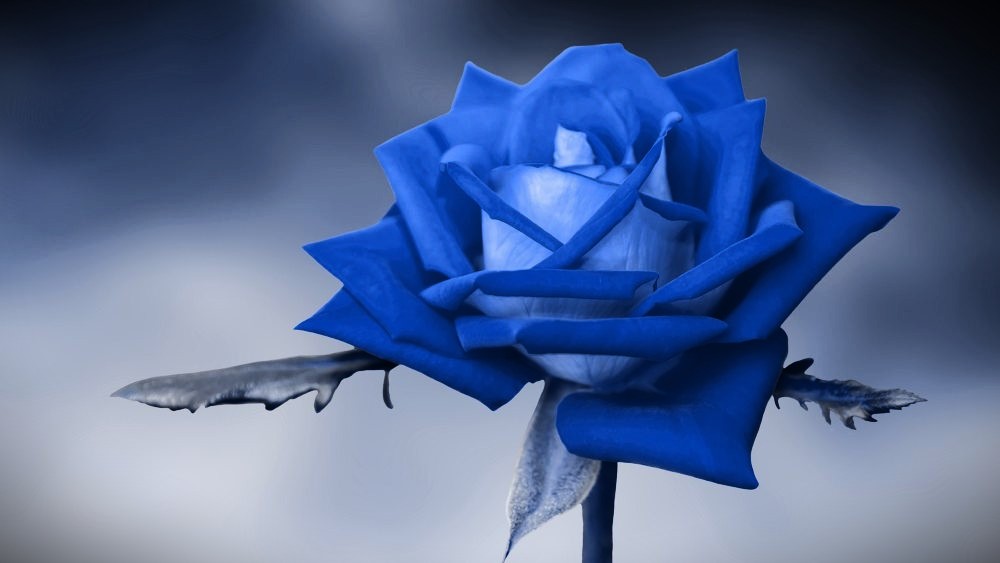
She pointed to a nearby rosebush with impossible, sky-blue flowers. “Two years ago I introduced the sky to the rosebush and let them see each other’s beauty. A love charm today can alter the course of a dynasty.” She waved her hand, and a tiny cloud condensed around her wiggling fingertips. “A major storm? Oh, it might take weeks to convince the right tempestas.”

You spend sleepless days and nights negotiating with kobolds, flirting with undines, and chanting to the volcano goddess Pele’s forgotten Atlantic Ocean cousin.

***

Rule 3. Every part of reality in the past, present and future is connected; thus one change can affect many things. But all those connections must be understood.

She suddenly grew grim. “I have much to learn about the causes of famines. I also made a series of sad errors regarding Napoleon Bonaparte.”

Your troops, vastly outnumbered, clear civilians from a coastline and send cannonballs and bullets to slow the onslaught, but the enemy establishes a beachhead. At the right moment, the ocean floor snaps and a tsunami races toward shore. Your soldiers withdraw just in time, and the enemy is ravaged.

***

Rule 4. Rarely can accurate predictions be made about the future. But the future must be considered at every move.

“I have lived for two hundred forty-seven years,” she said, “and experience has taught many hard lessons.”

You fear that sooner or later, the enemy will begin at zero.

Works eligible for awards

Here are some things published in 2025 that you may wish to consider nominating for an award — just a reminder. Some are my own works, some are my translations.

Science fiction and fantasy short stories by me

“To Defeat Water” Short story, 1175 words. If you curse Poseidon, he might curse you, too, time and time again. And life after life, you can fight back. Read it here: The Lorelei Signal, July 2025.

“Journey to Apollodorus” Novelette, 8760 words. In my novel Dual Memory, an AI named Par Augustus discovers a story about robots in the Apollodorus Crater on Mercury. This is the story. It focuses on the humans who struggle to create and maintain a scientific team when a lander sent to Mercury behaves unexpectedly. Success can be as stressful as failure. Oxygen Leaks Magazine, March 2025 (no longer in publication, contact me for a copy).

Novella translation

ChloroPhilia by Cristina Jurado. Translation of a novella, 20,200 words. Would you sacrifice your humanity to save the world? Nominated for Spain’s Ignotus Award, this strange coming-of-age story addresses life after an environmental disaster, collective madness, and sacrifices made for the greater good. Buy it here: Apex Books, January 2025.

Science fiction short story translations

“Trees at Night” by Ramiro Sanchiz. Translation of a short story, 6050 words. A librarian at a hospital-like sanatorium befriends a young patient named Federico for reasons that eventually become clear. Read it here: Clarkesworld Science Fiction and Fantasy Magazine, November 2025.

“Proxima One” by Caryanna Reuven. Translation of a short story, 4020 words. A machine intelligence called Proxima One sends probes into the galaxy on long journeys filled with waiting and yearning in a search for intelligent life. The probes cope with unexpected wonders, loss, and profound changes — but there is always possibility and hope. Read it here: Clarkesworld Science Fiction and Fantasy Magazine, May 2025.

“Bodyhoppers” by Rocío Vega. Translation of a short story, 5290 words. Minds can hop from body to body, but there’s always a problem because the system is designed to create them. One day, you can’t return to your own body because it’s occupied by someone with more money. Now you have no home, and you’re still madly in love. Clarkesworld Science Fiction and Fantasy Magazine, February 2025.

Poetry translation

Liquid Sand / Arena Líquida by Jorge Valdés Díaz-Vélez. Book of poetry translated by Christian Law Palacín and myself. This is the first major bilingual collection of poems by Jorge Valdés Díaz-Vélez, one of Mexico’s most respected contemporary poets. It gathers 42 of his works selected from six previous collections that span more than two decades of writing. Shearsman Books, November 2025.

My votes for the Hugo Short Story Award

This year’s Hugo Awards will be presented at the Seattle Worldcon on Saturday evening, August 16. The short story category, as usual, has some overlap with this year’s Nebula Awards, and if you read no other short fiction, I recommend reading the nominated stories. You’ll come away with an excellent panorama of where the field is today.

Here are my votes, and I based them on the storytelling risks and successes. You may very reasonably have different criteria and choices.

6. “Marginalia” by Mary Robinette Kowal (Uncanny Magazine, Issue 56) — The story is based on drawings of knights fighting snails in medieval manuscript margins, which is a charming inspiration: What if knights really fought snails? A struggling family joins with their lord in a fight to the death. The story wraps up too neatly for me, so it comes in sixth, but other Hugo voters loved it.

5. “Five Views of the Planet Tartarus” by Rachael K. Jones (Lightspeed Magazine, January 2024: Issue 164) — This is flash fiction about the horrors faced by those found guilty of treason, with an ennobling, subversive twist. I especially like that very short fiction has found its way onto the ballot.

4. “Stitched to Skin Like Family Is” by Nghi Vo (Uncanny Magazine, Issue 57) — The magic contained in clothing leads a sister to her brother, then gives her power. Carefully and competently told, and Nghi Vo’s love of old (vintage?) clothes and their histories shines through.

3. “Three Faces of a Beheading” by Arkady Martine (Uncanny Magazine, Issue 58) — A convoluted story about complicity in a genocide told through multiple points of view in a multi-player RPG and mass storytelling. I admire the experimental style, even if it was confusing.

2. “We Will Teach You How to Read | We Will Teach You How to Read” by Caroline M. Yoachim (Lightspeed Magazine, May 2024: Issue 168) — A message is sent apparently to humans from a very different, brief-lived species: a simple message that holds entire lives. This is another experimental format, and it left me with a lot to think about.

1. “Why Don’t We Just Kill the Kid in the Omelas Hole” by Isabel J. Kim (Clarkesworld, February 2024) — I nominated this for the strength of the storytelling voice, and after reading all the finalists I still like it best: “… tell me there is a better solution than putting one single kid in the hole, and letting that one single kid have a miserable life, in return for the good lives of all of our children?” The story has already won the Nebula, Locus, and BSFA awards, and I think it’s a strong contender for the Hugo. It’s an update on the classic Ursula K. Le Guin story, which also won awards when it was published in 1974. A half-century later, even though our exact circumstances have changed, we still have to make tough moral choices.

My vote for the Nebula Award for Novelette

As a member of the Science Fiction and Fantasy Association, I get to vote for the Nebula Awards. Here is my vote in the category of novelette (7,500 to 17,500 words). The award will be presented at the Nebula Conference on June 7 in Kansas City.

Overall, the stories amounted to a satisfying little anthology. I based my vote on the strength of the storytelling, not an easy metric to apply since they’re all good, but I thought one in particular was slightly better. Of course, your opinion may differ.

Negative Scholarship on the Fifth State of Being” by A.W. Prihandita (Clarkesworld 11/24) — A doctor finds herself limited by bureaucracy when an unusual alien comes seeking her care. Your heartstrings will be tugged.

Loneliness Universe” by Eugenia Triantafyllou (Uncanny 5-6/24) — Friends try to meet, but they can’t find each other even though they’re in the same place. Then things get more eerie (no spoilers). Not quite horror but very unsettling.

Katya Vasilievna and the Second Drowning of Baba Rechka” by Christine Hanolsy (Beneath Ceaseless Skies 4/18/24) — Romantasy, sweet and fulfilling. All fairy tales (or rather, tales about vengeful river spirits) should be like this.

The Brotherhood of Montague St. Video” by Thomas Ha (Clarkesworld 5/24) — The accidental discovery of a book printed on paper triggers an existential crisis in an electronic world with constant volatility. The understated storytelling style effectively delivers growing horror.

What Any Dead Thing Wants” by Aimee Ogden (Psychopomp 2/24) — Terraforming by magic leaves behind ghosts that want something. The cool, deadpan narration makes the fantastic feel real, but the magic system seems inconsistent to me.

Joanna’s Bodies” by Eugenia Triantafyllou (Psychopomp 7/1/24) — A teenage girl finds a supernatural means to bring a dead friend back. Although this is an obviously bad idea, it’s made worse by resentment, manipulation, immaturity, and guilt. Told with a gripping voice.

My vote: “Another Girl Under the Iron Bell” by Angela Liu (Uncanny 9-10/24) — A demon will do anything to get freedom from an evil master. Which one, the demon or the master, is the most evil? Which one is in love? Every word is measured and every detail impeccable.