How Frederick Douglass really learned to read

Florida classroom guidelines for its new African American History Strand, as adopted by the State Board of Education, state that classroom instruction should include “how slaves developed skills which, in some instances, could be applied for their personal benefit.”

William Allen, who is a professor emeritus of political science at Michigan State University, defended that strand this way: “I see what Frederick Douglass meant when he described his slave mistress teaching him to read only at the beginning because his owner put a stop to it. But that small glimmer of light was enough to inspire him to turn it into a burning flame of illumination from which he benefitted and his country benefitted.”

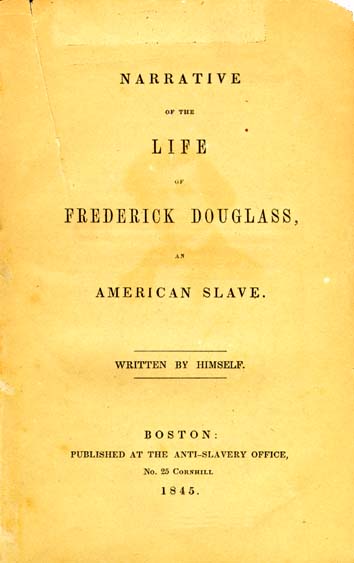
I’ve read Narrative of the Life of Frederick Douglass, an American Slave, Written by Himself (1845). It is a horrifying book, and I hope more people read it.

The book contradicts the claim that Douglass developed reading because of slavery. He learned to read in spite of slavery. If he had been free, learning to read would have been legal. Slavery specifically sought to withhold that personal benefit from him.

He recounted in Chapter VII that as a child in Baltimore, one of his mistresses, Mrs. Auld, was new to slave-owning, and “very kindly commenced to teach me the A, B, C. After I had learned this, she assisted me in learning to spell words of three or four letters.” Then her husband found out “and at once forbade Mrs. Auld to instruct me further, telling her, among other things, that it was unlawful, as well as unsafe, to teach a slave to read” and to do so “would forever unfit him [Douglass] to be a slave.”

That rebuke turned Mrs. Auld into a cruel mistress who did everything she could to keep him from learning more. “I was most narrowly watched.”

Out in the street, though, he learned at a shipyard that L, S, F, and A stood for larboard, starboard, fore, and aft.

“I immediately commenced copying them, and in a short time was able to make the four letters named. After that, when I met with any boy who I knew could write, I would tell him I could write as well as he. The next word would be, ‘I don’t believe you. Let me see you try it.’ I would then make the letters which I had been so fortunate as to learn, and ask him to beat that. In this way I got a good many lessons in writing, which it is quite possible I should never have gotten in any other way.”

At home, when no one was around, he practiced with the family’s young son’s discarded Webster’s Spelling Books. “Thus, after a long, tedious effort for years, I finally succeeded in learning how to write.”

But he had learned to hate slavery long before he learned to read and write.

Warning: What follows is sadistic brutality. In Chapter I, he recounted how, as a very young boy, he saw his aunt whipped by their master.

“Before he commenced whipping Aunt Hester, he took her into the kitchen, and stripped her from neck to waist, leaving her neck, shoulders, and back, entirely naked. He then told her to cross her hands, calling her at the same time a d——d b—h. After crossing her hands, he tied them with a strong rope, and led her to a stool under a large hook in the joist, put in for the purpose. He made her get upon the stool, and tied her hands to the hook. She now stood fair for his infernal purpose. Her arms were stretched up at their full length, so that she stood upon the ends of her toes. He then said to her, “Now, you d——d b—h, I’ll learn you how to disobey my orders!” and after rolling up his sleeves, he commenced to lay on the heavy cowskin, and soon the warm, red blood (amid heart-rending shrieks from her, and horrid oaths from him) came dripping to the floor. I was so terrified and horror-stricken at the sight, that I hid myself in a closet, and dared not venture out till long after the bloody transaction was over.”

In Chapter VIII, Douglass’s family was being split up as property after his master died. The master’s son was a possible heir, and “to give me a sample of his bloody disposition, took my little brother by the throat, threw him on the ground, and with the heel of his boot stamped upon his head till the blood gushed from his nose and ears.”

The book has eleven chapters — and many more incidents of savagery. Douglass concludes with the hope “that this little book may do something toward throwing light on the American slave system, and hastening the glad day of deliverance to the millions of my brethren in bonds.”

Nothing in the book tells how slavery personally benefitted the enslaved — or the masters. Douglass said it made them cruel and rage-filled: “Under its influence, the tender heart became stone, and the lamblike disposition gave way to one of tiger-like fierceness.” Slavery benefitted no one.
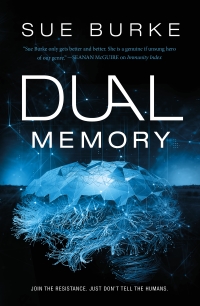
Dual Memory ebook only $2.99!

On Sunday, August 13, the ebook version of Dual Memory will be only $2.99 everyplace where ebooks are sold.

Dual Memory will also be part of Kindle Editor’s Pick Goldbox.

Here’s an excerpt from Chapter 2:

When I was a little boy, one day the camp held an art class for children, what I later learned was supposed to be art therapy. An aid worker in much nicer clothing than ours asked us to express our greatest fears. Paper and boxes of old crayons had been set out on the tables. I had a lot of fears, but even then I was smart enough to know it wouldn’t make me feel better to draw them. I wanted to make beautiful art like a real artist, but I also knew I should obey, so I drew stick-thin people standing in a line. They were waiting for rations, and we never had enough to eat.

The aid workers had brought their own food, nice food. I’d overheard grown-ups grumble. When the aid workers saw my drawing, they told me what a great little artist I was. They liked the picture so much that they kept it, so to get even, I stole some crayons. I could make more art, real art, and I did, as beautiful as I could, even if I was surrounded by ugliness and disaster, even if I wasn’t supposed to.

I’ll be at FanExpo Chicago on Saturday

How do science fiction authors predict the future? Do you want to write a book but don’t know where to start? Cat Rambo, J.S. Dewes, and I will try to answer these and other questions for you at two panels at FanExpo Chicago on Saturday, August 12, at the Douglas E. Stephens Convention Center in Rosemont. You can also enjoy cosplay, celebrities, comics, anime, shopping, fan meet-ups, workshops, artists, tattoo alley, family-centered events, and gaming..

Writing the Future with Sci-fi Authors, 12:30 p.m. in Fandom Panels Room 11. Join authors Cat Rambo (You Sexy Thing, Devil’s Gun), J.S. Dewes (Divide series, Rubicon), and Sue Burke (Semiosis, Dual Memory) with moderator Meg Bonney as we chat about our books, inspirations, and building strange new worlds in science fiction. Plus, bring your books and stay after the panel for a free signing.

Sci-fi Authors Signing, 1:30 p.m. in Fandom Panels Room 11. Cat Rambo, J.S. Dewes, and Sue Burke.

Ask Me Anything: Writing Advice from Science Fiction Authors, 4:00 p.m. in Workshops Room 4. Want to write a book but don’t know where to start? Have a question about the age-old debate of plotting vs. pantsing? Or maybe you just want to know more about where inspiration comes from. Then this panel is for you. Join authors Cat Rambo, J.S. Dewes, and Sue Burke with moderator Meg Bonney and get your burning questions answered.

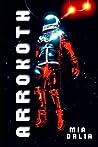
My Goodreads review of “Arrokoth” by Mia Dalia

Arrokoth

Arrokoth by Mia Dalia
My rating: 5 of 5 stars

Full disclosure: The author sent me this novella to see if I’d give a blurb for its cover — with the understanding that I’d only say what I really thought, and if I didn’t like it, she’d get nothing from me. But I couldn’t put it down. Here’s my blurb:

A story of hope, betrayal, and love with the intensity only science fiction can deliver.

I want to explain what I mean by “only science fiction can deliver.” Only science fiction can deal with enormous questions such as the survival of humankind, which this story is about, but that’s not the core of the story. At its core are a father and son. By an accident of science fictional fate, the father is pretty average and the son is a super-genius. They struggle to respect and love each other despite the divide between them. At times they can barely speak simply because they aren’t on the same level and have little in common, which they understand, yet they never give up trying to connect with each other.

Add to that, the Earth is in deep ecological trouble, and the son might be able to save humanity — another big strain on their relationship. In the face of adversity and betrayal, they are there for each other, aware of how little they can truly share besides mutual honest respect.

Arrayed against a life-and-death science fiction struggle, this is a story about abiding hope and love.

View all my reviews

Fifty years later, we’re getting together again

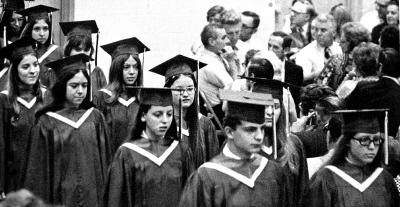
My high school graduating class, 1973 South Milwaukee Senior High School, will hold its 50th class reunion on July 29. A half-century!

How much has time changed us? Here’s an article I wrote for Reunions Magazine about our 20th reunion. Even then, some of us had already become unexpectedly different.…

(Photo: From the 1973 Bay Mist yearbook: Salutatorian Ron Wadley and valedictorian Marilyn Stroik lead the graduation ceremony march.)

***

We came out of curiosity. Two decades earlier, in caps and gowns, we had marched 435 strong out of our high school graduation ceremony, heading into a hot, muggy June evening and into our separate, uncertain destinies as adults.

On an equally hot, muggy July evening two decades later, in suits and cocktail dresses, we walked into a hotel banquet hall to see what had happened to us. A committee had worked for almost a year and had located all but 30 of our classmates. Of those, about a third came to the reunion. With spouses, that made a sea of 280 faces at dinner. We could have drowned.

We were rescued by name tags. After a score of years, we had forgotten too many names. Some of us had studied our yearbooks to prepare for this reconnection, but those old books piqued our curiosity more than they jogged our memories.

Beyond that, even in 1973, no one knew every one of our classmates. With so many students, we fell into separate circles, even cliques. We had jocks, greasers, freaks, and “status” (the high achiever, class leader types). Some of these cliques and circles had no use for each other.

Those feelings faded away over the years. Animosities were forgotten as we reacquainted ourselves. Every familiar face, no matter how vague the recollection, had become a friend. We all shared the same long, intense years during the creep toward maturity, and although our paths had diverged, we met with more in common than ever.

“What do you do? Where do you live? Are you married? Any kids?” — simple questions became the start of renewed bonds. We found common ground both from the old days and from the intervening years, and talked and talked and talked. Husbands and wives talked of the happiness of their marriages. Parents talked of their children in terms of joy and amazement.

We talked of careers. We had become pilots, pathologists, housewives, factory workers, police officers, artists, and office workers. There were surprises. Lighthearted teens had heard the calling to God’s work, class clowns and scholars alike were writing plays, and tiny threads of interest had grown into devoted vocations or avocations.

The amazed talk behind the backs of fellow classmates, however, centered on one thing: looks. A few people looked almost exactly as they had in school. Some others had changed beyond recognition.

In fact, many had blossomed. There were men with strong, sculpted faces, and gorgeous women in glamorous dresses who turned heads and confounded old friends who remembered them as — well, not like that.

We saw that our classmates — close friends and former rivals alike — had journeyed to their own place in the world, and on that hot, long July evening, we were reassured. Some had traveled farther away than we ever expected, but not out of reach from one another.