When ‘squirrel’ means ‘strikebreaker’

The Spanish word esquirol looks like the English word “squirrel,” but that’s not what it means. The name for the animal in Spain is ardilla, which comes from an old Iberian language word. In Spanish, esquirol means “strikebreaker.”

Here’s what happened: In Catalonia, in eastern Spain, the word in the Catalan language for the animal is esquirol, which comes from the Latin sciurus, which comes from the Greek skiouros. The English word shares the same root.

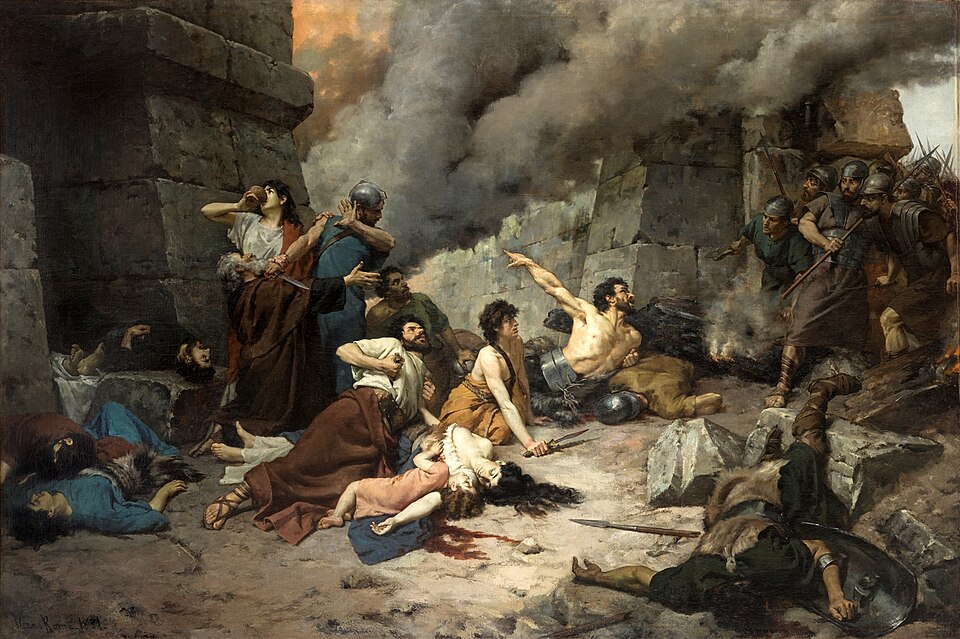
Toward the end of the 19th century, in a town near Barcelona named Santa Maria de Corcó, an inn had a pet squirrel in a cage at its entrance. Eventually the town began to be called “L’Esquirol” after the Inn of the Squirrel.

In 1902, 1908, and 1917, textile workers in the nearby towns went on strike, and workers from L’Esquirol offered to work in place of the strikers. So “strikebreaker” became esquirol — a term of disrespect, like scab in English.

That’s how the Latin-based word for “squirrel” finally entered the Spanish language. But the term has no connection with the cute little animal except for that minor historical accident.

When words travel from one language to another, they don’t always arrive safely.

Squirrels themselves are concerned about their own safety. Urban squirrels seem to believe that they’re safer close to noisy streets, even though they might become roadkill, because cars scare away their predators.

Here in Chicago and many parts of the United States, the animal that symbolizes a strikebreaker is a rat, specifically a rat named Scabby. The giant inflatable rat, often used by labor unions in street protests, is protected by free speech laws.

Chicago’s actual rats are preyed on by our urban coyote population, which traveled from the countryside to our streets, and we’re glad to have them.

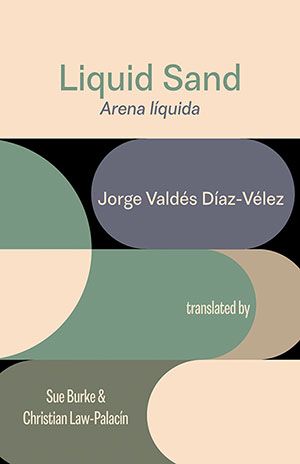
‘Arena Líquida / Liquid Sand’ by Jorge Valdés Díaz-Vélez, translated by Sue Burke and Christian Law-Palacín

I translated the poems in Liquid Sand / Arena Líquida with my Spanish friend Christian. One of us would draft the translation of a poem, then we would pass it back and forth, debating words, lines, and meaning — the goal of a translation is always to maintain the meaning. We didn’t quibble much. Translation is easiest when the original work is well-written.

In the opening poem, “Nadie / No One,” Ulysses returns to Ithaca to become a specter among his own memories. While there’s no way to summarize a collection of 42 poems, the theme of time occurs often. Time moves, and we move, but in different directions for different reasons, as the poem “Negro Sol / Black Sun” says:

The afternoon weighs heavily
toward its settlement. Ours
is due to a harder sun
and we have had to learn
to walk beneath its burden.

Liquid Sand / Arena Líquida is the first major bilingual collection of poems by Jorge Valdés Díaz-Vélez, one of Mexico’s most respected contemporary poets. Published this month by Shearsman Books and available from most bookstores, it gathers works by Valdés Díaz-Vélez selected from six previous collections that span more than two decades of writing.

Madrid Review Magazine says:

“In these pages, Valdés Díaz-Vélez explores time, memory, and the fragile equilibrium between movement and stillness. His poems evoke the physical and emotional geographies of the Americas while questioning belonging, transformation, and endurance. The English versions retain the clarity and meditative strength of the originals, inviting readers to cross the line between two languages and two sensibilities. To read Liquid Sand / Arena Líquida is to encounter poetry that is precise, reflective, and alert to the unseen rhythms of contemporary life. It is a landmark publication for readers of bilingual and Latin American literature.”

Why I don’t use AI

Clanker

I don’t use AI because I’m lazy.

My job as a writer and translator is to produce excellence. Let me use translation as an example of how AI creates extra work because it’s easy to explain, and I really am lazy.

You may know that an AI can produce a translation that might be passably correct, although it will sound “off” in certain ways. I could use that as a first draft and fix it, right?

Sure. But it’s faster and easier to do it right the first time. If I fix an AI first draft, I have to go over every single word just as if I were translating it on my own, sometimes reviewing it several times, to drag it into excellence. Fixing AI slop is like flying from Chicago to New York and changing planes in Miami. I prefer a direct flight. I also prefer airplane pilots who have not ingested hallucinogens.

I’ve been writing professionally for more than a half century, and I’ve learned how to do a lot of things because I’ve done them uncounted times, but I still learn something new every single time I write anything. Using an AI would be like sending someone to the gym for me. I wouldn’t get stronger. Although I am lazy, I will work hard at writing because that’s how I pay the rent — and because I enjoy writing so much that I want to excel.

Striving for excellence is satisfying. Look at the faces of sweaty athletes on the field during a game. They’re having the time of their lives.

***

Rant over. If you want further rants, here are some curated links:

AI Killed My Job: Translators – by Brian Merchant

The Value of Human Translation – American Translators Association

Best Translation Apps: A Translator Puts Four to the Test – American Translators Association

Humans are being hired to make AI slop look less sloppy – NBC News

As AI Gets Smarter, It Acts More Evil – by Ted Gioia

Time to Play … !! SPOT THE BOT !! – Writer Unboxed

AI Spam – The Encyclopedia of Science Fiction

Criticism in the Age of AI – by Lincoln Michel

Artificial Intelligence and Ethics – Delancyplace

Word of the week: Clanker – by Nancy Friedman – Fritinancy

The Internet Is Turning You Into Someone You’d Hate IRL – WebMD

Could AI Data Centers Drain Lake Michigan? – The Block Club Chicago Podcast

“En Paz” — two translations

Because “En Paz” is my husband’s favorite poem, I read it at a recent open mic here in Chicago, along with my two translations. The poem is by Amado Nervo, a Mexican poet, and it’s one of his most beloved poems, published in 1916.

My first translation aimed at keeping the meter and rhyme of the original poem. Then I thought it might be a bit sing-song, and I had to force a few meanings to make it rhyme, so I made a second translation that hewed close to the original. At the reading, people had mixed opinions about which one they preferred. How about you?

En paz

Muy cerca de mi ocaso, yo te bendigo, vida,
porque nunca me diste ni esperanza fallida,
ni trabajos injustos, ni pena inmerecida;

porque veo al final de mi rudo camino
que yo fui el arquitecto de mi propio destino;

que si extraje la miel o la hiel de las cosas,
fue porque en ellas puse hiel o mieles sabrosas:
cuando planté rosales, coseché siempre rosas.

…Cierto, a mis lozanías va a seguir el invierno:
¡mas tú no me dijiste que mayo fuese eterno!

Hallé sin duda largas las noches de mis penas;
mas no me prometiste tú sólo noches buenas;
y en cambio tuve algunas santamente serenas...

Amé, fui amado, el sol acarició mi faz.
¡Vida, nada me debes! ¡Vida, estamos en paz!


At Peace

So close now to my sunset, life, I bless you,
you never gave me hopes that were untrue,
nor unjust labor, nor suffering undue;

at the end of my rough road I see
I was architect of my destiny;

Wherever I put ice in things, they froze,
when I wanted honey, its sweets I chose:
my rosebushes always grew me a rose.

…True, winter will follow my endeavor:
but you never said springtime was forever!

Indeed, I spent some long nights lost in woe;
but you never pledged just comfort to bestow;
and yet some nights I thrilled beneath moonglow…

I loved, was loved, in sunshine found release.
Life, you owe me nothing. Life, we are at peace!


At Peace

Very close to my sunset, I bless you, life,
because you never gave me false hope,
nor unjust troubles, nor undeserved blame;

because I see at the end of my hard path
that I was architect of my own destiny;

that if I took honey or ice from things,
it was because I put ice or delicious honey in them:
when I planted rose bushes, I always harvested roses.

…True, my youth will be followed by winter:
but you never told me May would last eternal!

I encountered of course some long nights of sorrows;
but you never promised me only good nights;
and on the other hand, I had some sacredly serene…

I loved, was loved, and the sun caressed my face.
Life, you owe me nothing! Life, we are at peace!

Calvary, bases, and other anachronisms

Recently I was reading a fantasy novel set in a parallel universe, and one character commiserated with another, saying, “You’ve suffered a calvary” — that is, she’d suffered a great ordeal. The word comes from the hill named Calvary where Christ was crucified, but the Messiah hadn’t come to that parallel universe, so no one could suffer a “calvary.” Nothing important had happened on Calvary Hill.

The word “peanut” came into use in English in 1802. The plant is native to South America. If you’re a writer, you need to know this.

In another book, set in medieval Europe, a friend remarked that someone “had his bases covered” — that is, he was prepared. This is a baseball expression, and baseball originated in the United States in the mid-1800s, so people weren’t covering their bases centuries earlier on a distant continent.

Yet another book, also set in medieval Europe, spoke of plans being “dynamited” by a setback. Dynamite was invented in 1867 by Alfred Nobel (who is also famous for prizes).

Speaking of medieval expressions, we all believe kings back then could shout: “Off with his head!” Actually, they probably didn’t, not even Richard III (1452-1483), because that exclamation comes from the play Richard III written by Shakespeare in 1592, and it was made popular in Alice in Wonderland by Lewis Carroll in 1865.

Speaking of the Bard, the expression “lie low” also comes from one of his plays, as did “green-eyed monster” and “break the ice.” However, Lewis Carroll didn’t invent the “Cheshire cat” or “March hare”: these expressions originated a century or more before his book.

I pay attention to this because as a writer and translator, when I’m working with historical or fantastical material, I need to bear in mind that all words and expressions originate at a specific point in time and space, and they need to be congruent with the origin and setting of the work.

For help, check the Historical Thesaurus of English. It contains almost 800,000 words from Old English to the present day, primarily based on the Oxford English Dictionary.

There, I learned that “home run” only dates back to 1953. Additional research told me that home runs became more common around that year, so apparently athletes and sports writers needed to give a four-bagger an evocative name.

The lesson, for me, is to be sensitive, remain alert, do research — and expect surprises. The past is another country. They spoke differently there.