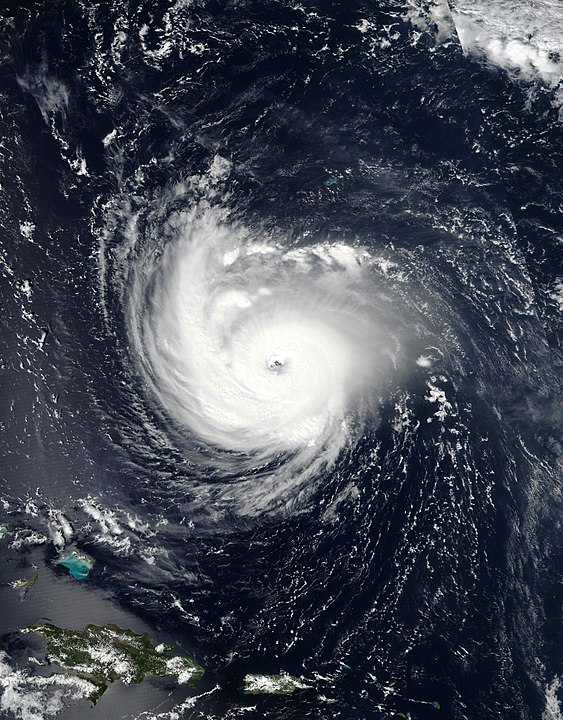
In 2018 I was traveling as Hurricane Florence was hitting the East Coast. One morning I was in Michigan eating breakfast at a Best Western motel. I was up very early, and everyone else in the breakfast room was obviously a tradesman: construction site workers and truck drivers, strong men used to going from job to job and working with their hands.
Television screens on the walls played the CNN morning news, and when it ran a segment on Hurricane Florence, the room went silent and every man watched somberly. These men, or their friends and coworkers, might be called on to haul supplies and repair or rebuild the storm’s damage as their next job. They looked grim, not joyful, at the prospect of plentiful work. Those jobs would bring them face to face with loss and grief, and the future might be hard on their hearts as well as their hands.
If you want an autographed copy of my next novel, Usurpation, and you won’t see me in person, you can order it through Volumes Books, a locally owned Chicago bookstore. The book comes out on October 29. International shipping can be arranged individually.
The official launch of the novel will be at 6:30 p.m. Wednesday, October 30, at Volumes Bookcafe, 1373 N. Milwaukee Ave., Chicago. Everyone’s invited! More details here.
Do your houseplants hate you? No, they don’t, no matter how much you neglect them. In fact, they’re praying to their green gods for your prosperity. They’ll struggle on as best they can, offering you beauty and silent non-judgmental companionship in exchange — they hope — for more-or-less regular watering and a spot near sunlight.
Plants need you, no matter how inconstant you are. A lot of the vegetable kingdom depends on animals, in fact, and plants haven’t always chosen well.
Consider this story of apples and oranges — osage oranges, to be exact.
First, the apple: colorful and tasty. Many animals love sugary treats. Apple trees make sweet fruit for us to munch on so we’ll throw away the core, and the seeds can germinate in a new place. (They don’t trust us much, though. They’ve made their seeds too bitter to eat so we’ll do our job right.)
How has this strategy worked out?
Apples originated in central Asia, and ancient peoples brought them east and west. When apples reached North America, they found a champion named John Chapman, “Johnny Appleseed,” who brought orchards to the United States frontier. In the 20th century, with more human help, the trees conquered large portions of Washington State. Now, 63 million tons of apples are grown every year worldwide, much of them in northern China.
From the apple trees’ point of view, it doesn’t get better than this. They grow worldwide and get lots of tender loving care. Human beings have served them very well.
In contrast, there’s the osage orange tree. It also produces fruit: green, softball-sized, and lumpy, full of seeds and distasteful latex sap. No one eats it. The tree originated in North America and once grew widely, but by the time European colonists arrived, its territory had shrunk to the Red River basin in eastern Texas. How did it fail?
The fruit had appealed to the Pleistocene’s giant ground sloth, a member of North America’s long-lost megafauna. The sloth scarfed them down, not chewing much, and the seeds traveled safely through its digestive system, emerging in new territory. Then, 11,000 years ago, human beings came to North America and couldn’t resist the allure of a couple of tons of meat per slow-moving beast. Giant ground sloths disappeared, and six of the seven species of osage orange also went extinct.
Why haven’t the remaining trees adapted their fruit to contemporary tastes? Because trees live for a long time, and 11,000 years ago for them is like the High Middle Ages for us. Lucky for them, humans find their wood useful and rows of the trees make effective windbreaks, so they currently grow across the United States and the world.
Still, useful wood isn’t much to offer the animal kingdom. Plants usually bribe us with food, the way that prairie grass entices grazers like bison to clear its domain of weeds. The bison nibble away weeds at the same time they munch on tasty grass leaves, which grass plants can easily replace. There used to be a lot more bison in North America, though. This strategy is starting to look shaky.
Flowering plants give bees nectar in exchange for hauling pollen from flower to flower, but bees seem to be having a rough time these days, too. If they go extinct, both wild and domestic plants are in deep trouble.
Plants find animal partnerships tempting. We’ll work hard for a fairly low price. But animals are unreliable and short-lived as individuals — and too often as entire species.
Back to your houseplants. Many of them likely originated in tropical rainforests. Your living room resembles a jungle: warm, reasonably humid, and moderately lit. Growing in confinement there isn’t such a bad life.
You, on the other hand, are fragile, distractible, hyperactive, and a bit murderous of your own kind as well as other species. Have your houseplants fallen into good hands? Can apples rely on us, and for how long? Are osage oranges one more extinction away from their own disappearance?
Your houseplants suffer from existential angst. Food is love, and so is fleeting beauty. They give their all for you. Go water them, offer reassurance, and consider what you owe to plants. You — and other species — need to be there for them now and in the future. Make them happy. Survive.
***
(This article originally appeared at the Tor/Forge blog.)
If you’re a writer, you may have been asked that. Here’s how I got the idea behind Semiosis and turned it into a novel. Exactly how it happened isn’t typical, but it’s not unusual, either — there are a lot of paths to a novel, and they’re all good — but I think this story illustrates an essential and sometimes overlooked aspect of writing.
The whole thing started with the houseplants on my dining room table in the late 1990s. (The photo is from this decade: different house, different plants, but just as many of them.) One day, I discovered that the little pothos in a mixed planter had wrapped itself around another plant and killed it. At first, I blamed myself for not having noticed earlier and intervened. Then a philodendron on a bookshelf tried to sink roots into another plant. I became suspicious and did some research.
What I learned was disturbing. According to botanist Augustine Pyrame de Candolle, “All plants of a given place are in a state of war with respect to each other.” They compete for light and nutrients, and they use ingenious tactics to abuse and even kill each other. For example, roses have thorns so they can impale their prickles into other plants and climb over them. In the process, they might kill the other plants — but this is war. Roses don’t care as long as they’re victorious.
Even more disturbing, I learned, are the ways that plants use animals for a variety of tasks. They grow flowers to attract pollinators, as we all know, and they’re sometimes very unkind to hard-working insects. Plants also grow fruit so that we’ll eat it and spread their seeds. When a tomato (tomatoes are technically fruit) turns red, the tomato plant is sending you a message: Eat me now! We think we grow crops to feed ourselves, when from the point of view of many plants, they reward us with food to manipulate us into helping them survive. We serve the plants.
I wrote and sold a non-fiction article to a magazine about the viciousness of the vegetable kingdom, and as a science fiction writer, I thought I ought to do something more with the idea. But what was the story?
Then, at a science fiction writing workshop, the instructor posed a writing prompt about a special kind of wall that suddenly appears in a war zone. War? That might work. What if, on a distant planet, a human colony suddenly appeared like a wall between warring plant factions? (Two classmates also got good ideas from that prompt. One wrote a tender steampunk love story, and another an epic fantasy novel.)
Soon enough, my short story was written and published, dramatizing the dangers of setting up a colony between warring plants. A couple of years later, I came back to the story and thought about expanding it into a novel — so I began more research. Even a fairly Earthlike planet needs a carefully designed ecology.
A few unexpected details that I discovered during that research became critical. On Earth, most iron has sunk to the planet’s core, but a lot remains mixed in the crust, so iron is common. However, if a planet happens to have a lot of carbon as it is formed, almost all the iron sinks down to the core, and the crust becomes iron-poor. Plants need iron to create chlorophyll. Your blood is red from hemoglobin, which contains iron. You have what plants want. Stories need conflict. This one could be life-or-death.
I also realized that no matter how I tweaked the plants, they’d respond slowly. They’re simply low-energy beings. I needed to slow down the story but still keep it compelling. I decided to jump in time between chapters by skipping from one generation of the human colonists to the next, a kind of story called a roman-fleuve.
By then, I had finally developed the idea enough to begin writing — after spending a few years researching all the details.
Story ideas come from many sources: sometimes from a conversation, a news report, an old memory, an episode from history, a reaction to another story, a compelling prompt, or a random observation as you’re walking down the street. I believe that ideas are as easy to encounter as snowflakes in winter. What’s hard are stories. Ideas need to be dramatized. It may take time, observation, research — and possibly a little luck — to discover the drama behind the idea.
There’s no right or wrong way to find the drama. I can only offer one piece of advice: Be patient with the process.
If you or someone you know and love hasn’t read the novel Semiosis yet, the ebook will be on sale throughout the month of September for only $2.99 for Kindle. This promotion will include an excerpt from the third book in the Semiosis trilogy, Usurpation, which will be released on October 29.
Besides that, from September 4 to 6, Barnes & Noble is dropping the preorder price for Usurpation, as well as other preorders. B&N Members get 25% off, and Premium members get an additional 10% off. This is good for print, ebook, and audiobook editions.
Meanwhile, I’ll be at Chicago’s Printers Row Lit Fest on Saturday morning, September 7, at the Speculative Literature Foundation table. Come say hi!