The feast day of St. Jerome, a famous ancient translator, is September 30, so today is celebrated as International Translation Day.
FIT, the Fédération Internationale des Traducteurs/International Federation of Translators, has created this poster and explanation to celebrate this year’s theme: Finding the words for a world in crisis.
FIT explains: “Our profession has been pivoting rapidly to keep up with changing realities and expectations, and the importance of our work to ensuring clear information reaches everyone and overcoming language barriers — both global and local — has been highlighted in unprecedented ways this year.”
Here are two more ways that you can celebrate translation, especially science fiction in translation:
FutureconSF, an online international science fiction convention with the slogan “The future happens everywhere,” was held September 17 to 20. Sixteen panels explored topics as varied as “Future Science Fiction in Translation: A Hidden Treasure to Innovate the Genre,” “Future East Asia: Techno-Traditions in Japan and Korea,” and “Anthropocene and Capitalocene: Threats and Hopes to the Future of Mankind.”
A new bilingual speculative fiction magazine is coming to the internet. Constelación will publish stories in both Spanish and English with four issues each year. Writers can submit their stories in science fiction, fantasy, and horror in either language. Fifty percent of the stories in every issue will be from authors from the Caribbean, Latin America, and their diaspora.
I hope to do some of the translation. A Kickstarter campaign will launch tomorrow, October 1. Submissions will be open from October 15 to November 1, 2020, for the first issue with the theme: The Bonds That Unite Us / Los lazos que nos unen.
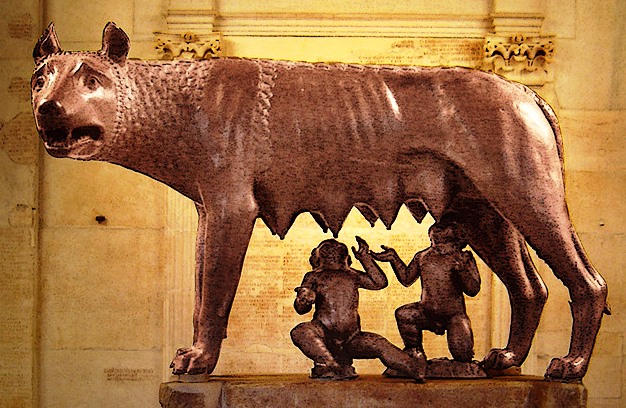
Matrimony means the state of being married: marriage.
Patrimony means an estate or heritage from one’s father or ancestors.
Apparently, it’s important for women to get married. It’s important for men to own things they didn’t pay for.
Both words originated in Latin based on the words for “mother” and “father” respectively. I conclude that something asymmetrical has been going on in both English and Latin for a long time.
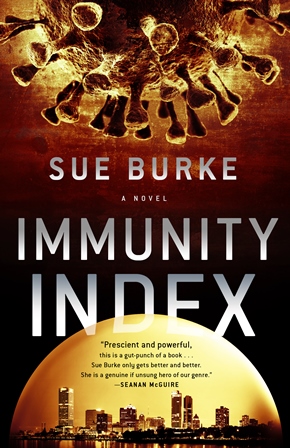
Here’s the cover art for my next novel, Immunity Index. Notice that the skyline is Milwaukee.
The book will be released on May 4, 2021, and may it be a better year for us all.
I began writing this long before Covid-19 appeared, and as I finished it early this year, I became deeply troubled — then I realized why. This novel tells the story of a better coronavirus epidemic than the one we have. I am heartbroken by our real-life loss and suffering. The challenge to our perseverance and compassion will last for months and years.
The official synopsis somehow fails to mention the woolly mammoth, but he’s in there and he’s loveable:
Sue Burke, author of Semiosis and Interference, gives readers a new near-future, hard sf novel. Immunity Index blends Orphan Black with Contagion in a terrifying outbreak scenario.
In a US facing growing food shortages, stark inequality, and a growing fascist government, three perfectly normal young women are about to find out that they share a great deal in common.
Their creator, the gifted geneticist Peng, made them that way — before such things were outlawed.
Rumors of a virus make their way through an unprotected population on the verge of rebellion, only to have it turn deadly.
As the women fight to stay alive and help, Peng races to find a cure — and the coverup behind the virus.
This is more of a cooking method than a recipe. I love to cook, and I’ve noticed that zucchini (also called marrow, summer squash, or courgette) gets kind of soggy when cooked. This works fine in ratatouille or similar dishes, but not in a salad. Then I figured out a way to make sog work for me with the aid of modern technology.
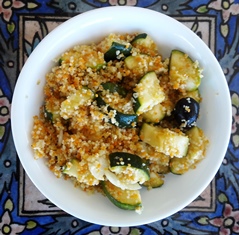
The secret is instant couscous. The photo shows tricolor instant couscous. Any brand and variety will do.
Begin several hours before you plan to serve the salad. Use ¼ cup/45g of couscous per zucchini. Put the couscous in a microwave-proof bowl, and, if you want, add herbs and spices to taste. Then chop the zuke into bite-sized pieces, put them in the bowl, and stir so the pieces are coated by the couscous. You can also add any other vegetables you might want lightly cooked in the salad, such as onions, garlic, or bell pepper. Do not add tomatoes at this point. Tomatoes get way too soggy when they cook.
Now cover the bowl and microwave until the zuke is almost tender. The exact time will depend on your microwave and the size of the batch. I do about five minutes for a two-zuke batch, stirring halfway through. It’s easy to overcook the zucchini, so keep an eye on it.
Take the bowl out, keep it covered, let it cool, then refrigerate. The zuke will continue to cook a bit as it cools. The couscous might seem dry, but don’t worry. The zucchini will eventually release a lot of liquid. Those things are mostly water anyway.
Before you serve it, add dressing, such as oil and vinegar, salt to taste, and any other herbs, spices, or vegetables you want in the salad, even cheese or cooked meat. Here’s where tomatoes can safely go in. (The photo includes black olives and onions.) Toss gently because the zucchini is a little fragile.
I wrote this article for TowerTalk, my apartment building’s newsletter. Montrose Beach is less than two miles to the south of us.
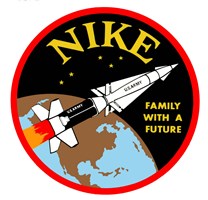
Crazy as it sounds, missiles stationed near Montrose Beach during the Cold War were armed with nuclear warheads. Even crazier, people seemed to think it was a good idea. This US Army “Family With a Future” decal anticipated a series of Nike missiles.
The missiles formed part of the Nike air defense system, one of 22 sites that ringed Chicago. These sites protected Chicago from Soviet aircraft flying over the North Pole and Canada to drop atomic bombs on the United States.
The Cold War was a time of international conflict that, for the most part, stopped short of violence. It began as World War II ended in 1945, leaving two major powers in the world: the United States versus the Soviet Union (USSR). The US already had atomic weapons, and the USSR exploded its first “A-bomb” in 1949.
The arms race was on, but neither side had long-range aircraft or missiles. As the Iron Curtain fell across Europe in 1946 and the Berlin Crisis sparked an airlift to the western half of the divided city in 1948-49, each side desperately researched improved weaponry.
Soon, about 300 Ajax launch sites were built to guard strategic locations. “Chicago has become the best-defended city in the Middle West against enemy air-to-ground attacks,” declared the Chicago Sun Times in 1960. Most of the city’s 22 sites were at its fringes, including in Indiana, but the lakefront had to be defended, too. Sites opened in Burnham Park, Jackson Park, and Lincoln Park.
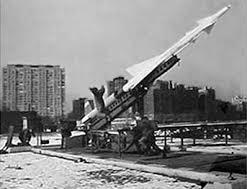
A Nike Ajax missile in firing position at Montrose Beach in 1956.
The Lincoln Park site, operational from 1955 to 1965, was typical. An underground magazine of four missiles was installed just north of Belmont Harbor, where a patch of grass grows now. The radar and computers were housed in a building just south of Montrose Beach, where a restaurant operates now.
The sites opened to praise from the Chicago American newspaper. “The thing you ought to remember is that the Nike’s presence hereabouts should enable you to sleep a lot more soundly.” The missiles, it said, “make nice neighbors.”
Meanwhile, the Cold War kept heating up. As both sides improved their weapons, Americans began to build fallout shelters and create Civil Defense Systems with hopes of surviving a nuclear war. The Korean War from 1950-53 tested the limits of the Cold War. Then in 1957, the USSR launched Sputnik, the first satellite to orbit the Earth. The space race was on, and the US lagged behind in missile technology.
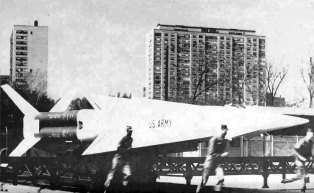
A nuclear-capable Nike Hercules missile and its crew at the Montrose Beach site in 1959.
In 1958, the Army replaced Ajax with Hercules missiles and nuclear warheads. The missiles had a range of 100 miles, a top speed of 3000 miles per hour, and greater accuracy. The warhead could destroy ballistic missiles as well as several aircraft at once.
The Cold War remained tense. In August 1961, the Berlin Wall was built.
Not everyone liked living with the threat of sudden annihilation, and in November 1961, the first US Women’s Strike for Peace inaugurated the slogan, “End the Arms Race, Not the Human Race.”
In 1962, John Glenn became the first American to orbit the Earth. Later that year, the US discovered USSR missiles armed with nuclear weapons in Cuba, and the crisis almost sparked a nuclear war. That led to the 1963 Test Ban Treaty that prohibited the testing of nuclear weapons in the atmosphere, which had been spreading around a lot of radioactivity.
But as a consequence of the space race, missile technology improved. Soon the USSR and the US could launch intercontinental ballistic missiles carrying nuclear warheads, and the Nike sites became obsolete. In 1965, the site at Montrose Beach and Belmont Harbor returned to park use, as did nine of the other sites around Chicagoland.
Eventually, the Cold War became history. Now Montrose Beach hosts the joys of nature and piping plover nests — but we still live in crazy times.