Convocatoria: “Todos los demás planetas”

Se abre el plazo para la convocatoria “Todos los demás planetas” desde el 12:00 a.m. del 30 de septiembre a las 11:59 p.m. del 31 de octubre de 2021, (hora de España).

Las escritoras españolas Sofía Rhei y Cristina Jurado y yo buscamos ficción especulativa con perspectiva sociopolítica de género, o sea, relatos que utilicen lenguaje de una manera creativa y no conformista respecto a los roles binarios de género. Se valorarán las formas de lenguaje neutro en todas sus variantes, femeninos genéricos, expresiones lingüísticas de sociedades con más de dos géneros, géneros originales y cualquier otra opción diferente a la normatividad del masculino plural por defecto. Las narraciones que aporten términos reales de culturas nativas en las que los roles de género se entiendan de manera diversa serán extraordinariamente bien recibidas.

Entre los relatos enviados se realizará una selección que será publicada en la revista SuperSonic. Asimismo, se elegirá un relato ganador que será traducido al inglés y enviado a diversas publicaciones internacionales.

Hasta 5.000 palabras, un relato por persona, textos inéditos y escritos en español.

El resultado se anunciará en la web de la convocatoria y en las RRSS de las convocantes el 1 de febrero de 2022.

Toda la información sobre esta iniciativa se puede consultar en la web https://todoslosdemasplanetas.com.

In the zone: What planet am I on?

Artist’s concept of how rocky, potentially habitable worlds might appear elsewhere in our galaxy. Credit: NASA/JPL-Caltech/R. Hurt. https://exoplanets.nasa.gov/what-is-an-exoplanet/planet-types/terrestrial/

You may have heard about “writing in the zone.” It’s a creative state where the writer or artist becomes one with the work, in the flow, totally focused. Athletes can experience this, too.

Having been a writer for a while, I can say that this rarely happens. Most of us work distracted, even if we’re trying not to multitask. The computer advises you about a program update, the dog wants your attention, you’re out of coffee, and what’s that funny smell?

Still, it can happen. I remember one time vividly. Actually, what I remember is when it ended. I’d been working on the novel Interference, which takes place on a distant planet called Pax. I felt like I was there, living in the odd and wonderful sights, the cacophony of sounds, and the scents that carried meaning.

Then I looked up. Where was I? Not on Pax. So what planet was this? A blue sky, an oxygen atmosphere, and lots of clear signs of homo sapiens dominance. Yeah, this was Earth. In fact, pretty soon I recognized the city, the building, and the year, and remembered what I was doing there.

I still had one wisp of a question. Why was I on Earth? Why not somewhere else or some other time? The answer was obvious — but not entirely satisfying. Do I really have to be here?

She thought it was only a dime…

Here’s a bit of my family lore. When my great-grandmother was a young girl, her family fell on hard times, and she had to get a job. They were living in Milwaukee, and Pabst Brewery had recently won a blue ribbon at the 1893 World Columbian Exposition, the Chicago World’s Fair. The brewery was tying blue silk ribbons on every bottle.

That was her new job. (In those days, children could work in factories that made beer.) After her first week, tying countless ribbons, she got her pay envelope. She could tell by feel that it contained only one small coin. A dime! She’d worked so hard and wanted to be so proud of the help she could give her family, but she’d earned only ten cents.

She cried all the way home on the trolley and gave the envelope to her mother, who opened it. The coin was a ten-dollar gold piece.

A glimpse of unexpected heartbreak

The disaster of Hurricane Ida in Louisiana and other southern states reminds me of an unexpected heartbreak I witnessed in 2018.

I was traveling, and on September 10, I was in Michigan eating breakfast at a Best Western motel. I was up very early, and everyone else in the breakfast room was obviously a tradesman: construction workers and truck drivers. These were strong, tough men used to going from job to job and working with their hands.

Television screens on the walls played the CNN morning news, and at one point the news ran a segment on Hurricane Florence. The mammoth storm was about to hit the Carolinas coast and cause catastrophic damage.

The room became silent and every man watched somberly. On their next job, these men, or their friends and coworkers, might be called on to haul supplies and to repair and rebuild the storm damage. They looked grim, not joyful, at the prospect of plentiful work.

Their jobs would bring them face to face with loss and grief, and the future could be hard on their hearts as well as their hands. They’d seen it before, and they were going to see again.

My critique group has published an anthology

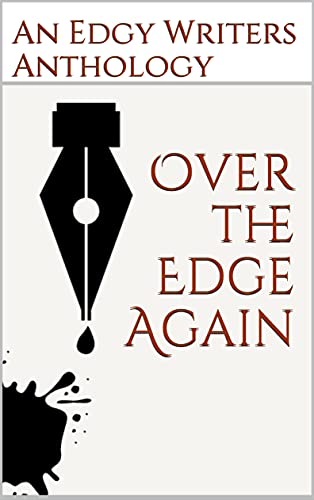
Over the Edge AgainOver the Edge Again by Samuel Durr


We did it again. My writers critique group here in Edgewater neighborhood of Chicago has released an anthology. It shows off the high skill level of the members I’m lucky enough to critique with — and the range of our imaginations.

“As Fast as You Can,” by Julie Danvers, takes a hard look at corruption in the Fairy Kingdom. Who murdered Humpty Dumpty?

“Sport,” by Z Jeffries, examines an ugly divorce through the tender eyes of a boy fixated on comic books. Could Batman fail?

“R/truthseekers,” by Briana Shucart, narrates the pathetic implosion of a Reddit online conspiracy group.

“Milk Cow Standing in Field #48,” by Nate Currier, studies art and its meaning in an authoritarian society, using an absurdist angle. Nominated for a Pushcart prize.

“Maleficium,” by Edward Pionke, takes the point of view of an oppressor without taking his side.

“Let Me Stop You There,” by Edward Pionke, could have been titled “Am I the Asshole?” If you have to ask, the answer is yes.

“Catch and Release Protocols,” by Coleman Gailloreto, accomplishes that rare feat in science fiction: humor.

“In the Weeds,” by Sue Burke. I destroy humanity, but with a dash of marvel.

“Wild Heart,” by Samuel Durr, who also edited the anthology (thanks!), uses his experience as a hunter to explore the relationship between two people who didn’t seek each others’ company.

These nine stories have no theme besides short works that we’re proud of. By the way, new members in Chicago’s Edgewater neighborhood are always welcome. You can find us on Meetup: https://www.meetup.com/edgywriters/


View all my reviews