Autobiography of memory foam

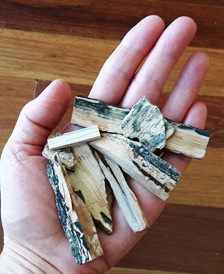
Soft and springy: I was born that way, as polyurethane foam should be, a comfort to all, forgiving to those in need of a cushion. I had a noble purpose.

At least, I thought I had a purpose. I thought I knew who I was.

Soon I came under pressure. At first, I sprang back. I could handle it. I was a service to others, and I was proud.

But I had a hidden side, hidden even to myself, a built-in internal stickiness, a limit to my abilities. I could not spring back forever … or even for very long.

Pressure defeated me, left me flat, unyielding, useless. I lost my purpose in the world … and too soon, I will crumble into dust.

Now I can only remember soft days and soothing nights. Apparently, that’s what my name means. Memory foam is merely the memory of foam.

Where to find me at Capricon 42

You’ll be able to find me in a variety of places at Capricon 42, a four-day science fiction convention held annually in the Chicagoland area. This year it will be from February 3 to 6 at the Sheraton Grand Chicago Riverwalk hotel downtown — in person with proof of vaccination and a high-quality mask. (Also with a virtual component. See you there, too!)

You can find me on some panels, and I’ll wander through the dealer’s room and art show looking for unique purchases. In the evening, I hope to pop into a few parties to meet old friends and make new ones. If you’re at Capricon, say hello!

My schedule:

How to Moderate Panels, Missouri Room, Friday, 2:00 p.m. Great moderation can make the difference between a mediocre panel and a fantastic one. Janice Gelb, moderator; Sue Burke, Helen Montgomery, Brother Guy Consolmagno.

Writing Serial Fiction, Huron Room, Friday, 6:00 p.m. Serialization has come to dominate many corners of science fiction and fantasy. What unique challenges does it present and how can they be managed or even used to make a work better? Mark Huston, moderator; Bob J. Koester, Kathryn Sullivan, Sue Burke.

Regional/International Fandom, Missouri Room, Saturday, 1:00 p.m. Hear about different fan cultures across North America and throughout the world from fans who live in places outside Chicagoland. Janice Gelb, moderator; Sue Burke, Alexander von Thorn.

We Can (Can We?) Fix Global Warming! Superior Room, Saturday, 2:00 p.m. Geoengineering, large-scale deliberate changes to the atmosphere (etc.) to deal with global warming, is almost a taboo topic in environmental circles, often met with open hostility. What are the possibilities, why are they so unpopular, and can we really avoid needing them? Sue Burke, moderator; Chris Gerrib, Brother Guy Consolmagno.

Whose Hero’s Journey? Erie Room, Saturday, 4:00 p.m. The Hero’s Journey is a storytelling staple. But to what extent does it encode a male point of view? People criticize the protagonists of Mulan and Captain Marvel for being “Mary Sues” who didn’t work to achieve their powers. Men get told to roll up their sleeves and work their way to the top while women have to struggle to be heard and recognized for their contributions. Is the Hero’s Journey fantasy for women about the fight to be acknowledged for the power they already possess? Maria Schrater, moderator; Karen Herkes, Ada Palmer, Sue Burke, Jeana Jorgensen, Michi Trota.

How I Wrote This, Erie Room, Sunday, 12:00 noon. A panel of authors will describe the path of a work of fiction from idea to first draft, second draft, beta reader, more drafts, and finally publication. Where did the idea come from and how did the storytelling take shape? Here’s a chance to look at how inspiration intersects with craft in real life. Maria Schrater, moderator; Sue Burke, Brendan Detzner, John Everson, Cassandra R. Moritz, Chris Gerrib.

Last year’s Capricon science fiction convention: one of covid’s better memories

If the pandemic has taught us anything, many of its lessons are bitter and involve loss, disappointment, and loneliness. Good memories are few, but here’s one. This is what I wrote in February 2021 about the online version of Capricon, inspired by the poem “To the Fig Tree on 9th and Christian, by Ross Gay.” This year’s Capricon will be held on February 3 to 6, and I’ll be there! More about that in a coming post.

***

Capricon is a Chicago science fiction convention. We come together for four days in February at a hotel convention center, and we call ourselves family, except that in 2021 we did not come.

We met alone together, hundreds of us, with cameras, microphones, and keyboards, and we recreated what we could. Art, games, panels, films, freebies, kid’s activities, the guy in the goat costume, other people in costumes, music, parties — some with DJs — and of course the commemorative tee-shirt. It depicted a goat wearing a face mask.

At a science fiction convention, fans and authors, scientists and singers, costumers and gamers are the same, energized by ideas and self-expression. We gather to share our love for our mutual passions. It’s a tradition. The 2021 Capricon was the forty-first annual event.

With the freedom of non-meatspace we could welcome people from Vietnam, Brazil, Jamaica, Puerto Rico, and thirty-eight states, not just Chicagoland and those who could travel. No hugs, but we enjoyed a wider horizon and intentional inclusion. We had special early hours so distant fans could share their dinner with our breakfast. Two hundred activities were offered to do over a four-day weekend, including bartenders to help you mix your own drinks at home during the evening parties. The box fort got built. Bar Fleet had its discotheque, this time virtual, not in a hotel suite crowded to sweaty capacity.

At a Zoom panel I ran, discussing the power of the short story, we wondered how short a short story could be, and an audience member wrote a three-word story in the chat box: “Hindsight is 2020.” There was a lot to unpack in that, but I just laughed, glad to be looking back.

Our convention had a theme: “Creating the Future We Want.” We talked about the future, and how it was made, both by intention and opportunity. We considered various futures after global warming. With or without police. With or without forgiveness. With enough room for a few grudges to hold their distance. With enough closeness to fill the space with thanks.

We tried so hard to have fun, to give each other fun, to be the family again.

We set out our intentions for the coming year’s convention with the theme of music, and we planned to meet at a hotel already reserved, brick and mortar, flesh and blood. We hoped to have again the future we were working to create. Sing us in, 2022.

2021 publishing roundup – update

I’ve discovered that one more work of mine appeared in 2021, a republication of my translation into English of the short story “Francine (draft for the September lecture)” by Maria Antònia Martí Escayol, at Apex Magazine on December 28. This evocative, haunting story will make you wonder what’s real: after Renée Descartes’s daughter dies, he and his fellow scientists try to bring her back to life using 17th-century science.

As a reminder, here are my works that were first published in 2021 (and eligible for awards):

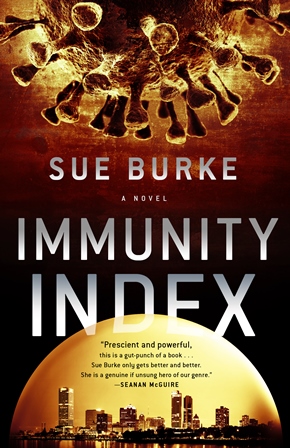
Immunity Index, a novel, published by Tor (read an excerpt). It’s about a coronavirus epidemic, but a much better one than our own covid-19 — because it’s over at the end of the book. Also, the novel includes a very loveable woolly mammoth.

“Embracing the Movement” by Cristina Jurado, which I translated into English, published in Clarkesworld Magazine’s June 2021 edition. The original short story, “Abrazar el movimiento,” won Spain’s Ignotus Award for Best Short Story 2021, the equivalent of a Hugo Award. The story’s lush prose hides horror.

Two of my short works were republished in 2021:

“Who Won the Battle of Arsia Mons,” a novelette about robots in a fight to the death on Mars, in Clarkesworld Year Twelve: Volume One (Clarkesworld Anthology).

“In the Weeds,” a short story about plants fighting climate change, in Over the Edge Again: The Edgy Writers Anthology. Other members of the Edgy Writers Critique Group shared some thoughts about their stories in these posts: “Sport” by Z Jeffries, and “Wild Heart” by Samuel Durr.

Guest post: conflict through misunderstanding

My writers critique group here in Chicago recently released an anthology, Over the Edge Again: An Edgy Writers Anthology.

In this essay, Z Jeffries shares the story behind his story in the anthology, “Sport.”

***

I was eight years old when I was given Frank Miller’s The Dark Knight Returns. For those reading who don’t know, it is a very violent, very adult comic book. I didn’t read it at that age, thank God. I totally saw some inappropriate art on those pages before I probably should have, but I didn’t read it until I was in my early teens. I was still too young to have read it then.

I also vividly remember watching the film Lord of the Flies when I was too young. It turned my stomach and made me cry, but I couldn’t look away.

I think most of us have stories like this: consuming media before it was appropriate. There is a suddenness in experiencing something through storytelling and/or art before our mind understands the context. The jarring feeling of consuming media about sex or violence before we’re ready comes with a high. Sure, forbidden acts give a jolt of adrenaline, but being faced with concepts foreign to us creates a misunderstanding. I believe this type of misunderstanding is a universal concept most people experience growing up.

There’s an old theatre anecdote that I love to apply to my writing. Two actors are in a scene on a dinner date. The director (or teacher) asks the actors where they are. One actor thinks they’re in a fine dining restaurant, the other says they’re in a fast-food joint. The actors are in conflict through misunderstanding, and that conflict affected the scene. That conflict made this an anecdote that has now been passed along.

Conflict is key to fiction, that’s a basic principle. I’m sure there are obscure exceptions, but conflict is paramount to a good story. If all characters are in agreement, there’s no tension, no stakes, no story. But while it’s fun to read about opposing characters butting heads, I believe one of the most underrated forms of conflict is misunderstanding. Sure, fight scenes and clever wordplay can entertain, but misunderstanding can make a reader too afraid for the main character to even continue reading.

Here’s another scenario for the theatrical scene — both actors are in a fine dining restaurant, only for one, it’s the fanciest restaurant they’ve ever been to, while for the other, it’s a sad place that reminds them of an ex. They’re in the same location, but each character has a context that creates a conflict through misunderstanding. Is this a fancy place or one that is sad and full of memories? That question affects the scene — are they celebrating or sadly reminiscing?

And isn’t that almost always true of settings in real life: the context of our experiences colors our perception of the world around us. We carry our context with us into each scene, creating our own reality by how we perceive it.

I feel disingenuous when my characters share context about their surroundings. I feel like someone’s perspective has been lost if they both exist in the same setting with the same context.

Writing younger characters allows another fun way to skew perspective: ignorance. Everything a person knows was learned and there was a time before that person had learned it. So it’s fun for young characters to be incorrect, to misunderstand the meanings of words, to misinterpret the context of a situation.

A gap of knowledge in which the reader or audience understands something a character does not is known as dramatic irony. It’s useful for creating tension (oh no, don’t go in there, favorite character of mine!) as well as creating sympathy (it’s not their fault, they didn’t know any better!). With younger characters, most books are filled with dramatic irony.

In my short story “Sport,” the point-of-view character is young and prone to misunderstanding. I had a chance to really play with an unreliable narrator. John Harris isn’t lying, incapacitated, or mentally ill, common types of unreliable narrators. John Harris just doesn’t understand the adult situation his family is in, in a very similar way to the pictures in Frank Miller’s Dark Knight Returns I didn’t understand.

Hopefully, understanding what John Harris does not will give the reader an emotionally impactful experience. I wonder if anyone who knows of Frank Miller’s work might have gasped a little reading the opening line to this blog, might have had a tiny one-sentence-worth of an emotionally impactful experience.

In “Sport,” John Harris, this innocent boy, worries about the fate of fictional heroes, while it’s the reader who knows John Harris’s world is crumbling around him. The burden of this boy’s reality is borne by the reader, gasping as this kid reads his comic books.