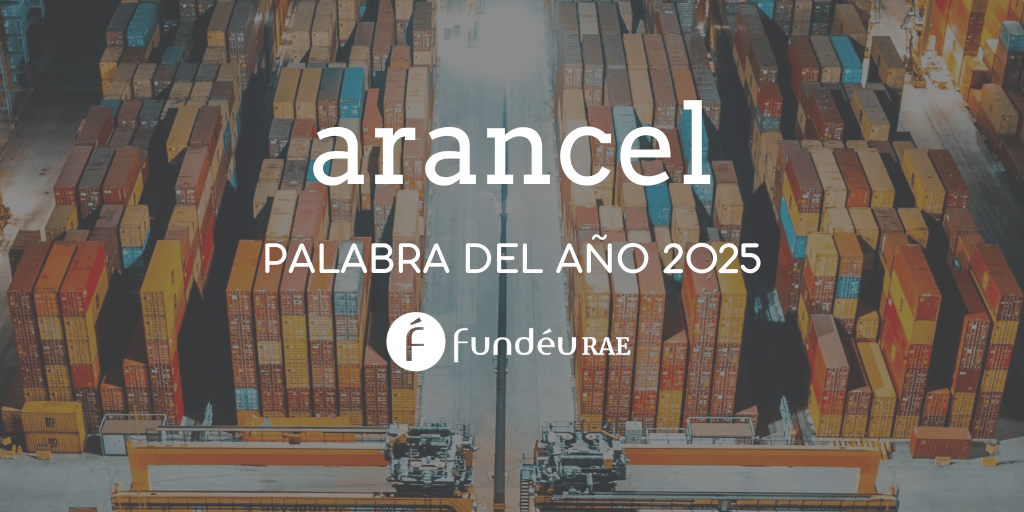
Let’s start with Spain, since I used to live there. The word of the year for 2025 is arancel (tariff), according to Fundéu, which advises on questions about Spanish language use for news reporting. Due to US policy changes, issues of tariffs for imports and exports have been in the news a lot in Spain.
The runners-up give a peek into other issues in Spanish news: apagón (power outage), macroincendio (massive wildfire), preparacionista (prepper), boicot (boycott), dron (drone), generación Z (Generation Z), macrorredada (massive roundup, specifically ICE arrests in the US) rearme (rearm, as with weapons), papa (pope), tierras raras (rare earths), and trumpismo (Trumpism).
The Economist magazine, Australia’s Macquarie Dictionary, and Merriam-Webster Dictionary all chose slop. “Slop merchants clog up the internet with drivel,” the Economist opines. Merriam-Webster defines slop as “digital content of low quality that is produced usually in quantity by means of artificial intelligence.” The Macquarie definition specifies “low-quality content created by generative AI, often containing errors, and not requested by the user.” All three sites have long lists of runner-up words.
For Oxford University Press, the word is rage bait, “online content deliberately designed to elicit anger or outrage by being frustrating, provocative, or offensive, typically posted in order to increase traffic to or engagement with a particular web page or social media account.” Oxford adds, “The Oxford Word of the Year can be a singular word or expression, which our lexicographers think of as a single unit of meaning.” The runners-up are aura farming and biohack. (Robert Reich points out that rage bait is profitable.)
Dictionary.com chose 67for 2025. “Most other two-digit numbers had no meaningful trend over that period, implying that there is something special about 67,” the site informs us, adding that “we’re all still trying to figure out exactly what it means.” Dictionary.com’s runners-up include an emoji. Both CNN and AP agree 67 can be annoying. The comic xkcd has additional information about funny numbers.
Canada’s Queens University picked maplewash, “the deceptive practice of making things appear more Canadian than they actually are.” That is, maplewashing encourages buying Canadian-made products rather than US imports. The word edged out elbows up. Both words speak to our times, and as an American, I apologize to our nice neighbors to the north.
Cambridge chose parasocial: “involving or relating to a connection that someone feels between themselves and a famous person they do not know, a character in a book, film, TV series, etc., or an artificial intelligence.” It adds, ominously, “The emergence of parasocial relationships with AI bots saw people treat ChatGPT as a confidant, friend or even romantic partner. These led to emotionally meaningful – and in some cases troubling – connections for users, and concerns about the consequences.” Sloppy consequences.
Collins Dictionary picked vibe coding, which “refers to the use of artificial intelligence prompted by natural language to write computer code.” (See also: slop.) Collins, too, has a runner-up list, and some of those terms will sound familiar.
Global Times reports that the Trilateral Cooperation Secretariat has chosen future as the China-Japan-South Korea Spirit Word of the Year. The secretary-general of TCS said future reflects the optimism and determination of the people of China, Japan, and South Korea to build closer ties in the future.
Time chose “the architects of AI” as Person of the Year 2025. (See also: slop.)
Pantone chose its color of the year, Cloud Dancer, “a lofty white that serves as a symbol of calming influence in a society rediscovering the value of quiet reflection. A billowy white imbued with serenity, PANTONE 11-4201 Cloud Dancer encourages true relaxation and focus, allowing the mind to wander and creativity to breathe, making room for innovation.”
As reported by NPR and Today, not everyone is impressed by the color, although Homes and Gardens points out that “white is timeless.” I should mention that my home office is painted white. In my case, it’s because I was too lazy to think harder.
 Sue Burke