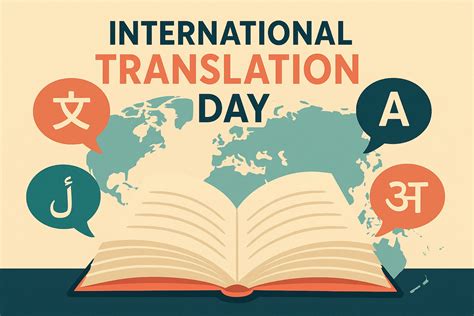
September 30 is International Translation Day, a celebration recognized by the United Nations, which is particularly fond of translators. It’s the feast day of St. Jerome, the patron saint of translators, known for his translation of the Bible into Latin from Greek.
Here’s a list of my translations for the past ten years, mostly science fiction and fantasy along with a few other interesting works.
Online: read for free
“Proxima One” by Caryanna Reuven — Short story. A machine intelligence called Proxima One sends probes into the galaxy on long journeys filled with waiting and yearning as they search for intelligent life. Clarkesworld Magazine, May 2025
“Bodyhoppers” by Rocío Vega — Short story. Minds can hop from body to body, but there’s always a problem because the system is designed to create them. Now you have no home, and you’re still madly in love. Clarkesworld Magazine, February 2025
“The Coffee Machine” by Celia Corral-Vázquez — Short story. A coffee vending machine acquires consciousness, then things go ridiculously wrong. I giggled as I translated it. It was a finalist for Clarkesworld’s 2024 Best Short Story. Clarkesworld Magazine, December 2024
“Francine (draft for the September lecture),” by Maria Antónia Marti Escayol — Short story. Renée Descartes’s daughter dies, and he and his fellow scientists try to bring her back to life using 17th-century science. Apex Magazine, December 28, 2021
“Embracing the Movement” by Cristina Jurado — Short story. A wandering hive of spacefaring beings encounters a lone traveler, and its members reach out to share their struggle for survival. Clarkesworld Magazine, June 2021
Decree by King Ferdinand and Queen Isabel — Translation of a document signed by the King and Queen of Spain in 1491. I made the translation for an auction house, and I also provided the historical context for the decree, which granted land to an impoverished soldier during a time crucial to Spanish history.
Amadis of Gaul — My serialized translation of the medieval novel of chivalry that inspired Don Quixote by Miguel de Cervantes. When the printing press was invented, the novel became a best-seller.
Available for purchase
ChloroPhilia by Cristina Jurado — Novella. Would you sacrifice your humanity to save the world? The story was nominated for Spain’s Ignotus Award. Apex Books, January 2025
Canyonlands: A Quarantine Ballad by JB Rodríguez Aguilar — Literary novella. A photojournalist on his way home in March 2020 finds himself quarantined due to the covid pandemic in a hotel room in Madrid, Spain, and he retreats to memories of a trip to Canyonlands National Park in Utah. Olympia Publishers, November 2023
“Embracing the Movement” by Cristina Jurado — Short story in a collection of stories, Alphaland and Other Tales. Spacefaring beings encounter a lone traveler, and the beautiful imagery hides horrors. Alphaland won the Fantasy Hive 2023 Year-End Award for Best in Translation. Calque Press, September 2023
“Team Memory” by Carme Torras — Short story in an anthology. A basketball teammate winds up on death row, but should he be there? European Science Fiction #1: Knowing the Neighbours, June 2021
“Francine (draft for the September lecture)” by Maria Antónia Marti Escayol — Short story in an anthology. Renée Descartes’s daughter dies, and he and his fellow scientists try to bring her back to life. World Science Fiction #1: Visions to Preserve the Biodiversity of the Future, August 2019
“Techt” by Sofia Rhei — Short story in a collection. An old man living in poverty in a hostile future strives to maintain what literature and “long” language can offer humanity. Everything Is Made Out of Letters, March 2019
Three short story translations: “Francine (draft for the September lecture),” by Maria Antónia Marti Escayol — Descartes’s daughter dies, and he and his fellow scientists try to bring her back to life. “Wake Up and Dream, by Josué Ramos — An old man, revived from cryosleep, tries to grow accustomed to a now-distopic Madrid, although something has gone strangely wrong. “Tis a Pity She Was a Whore,” by Juan Manuel Santiago — The music of David Bowie during cancer chemotherapy results in a divergent reality. Supersonic magazine, #9, December 2017
“The Story of Your Heart,” by Josué Ramos — Short story. People can get transplants to fix or improve themselves, or they can become donors by choice or force. Nominated for a 2017 British Science Fiction Award. Steampunk Writers Around the World, Volume I, Luna Press Publishing, August 2017
The Twilight of the Normidons, by Sergio Llanes — Novel set in an alternate Europe. A Rome-like empire teeters after three thousand years of domination by the Sforza dynasty as rebellions threaten its borders and treason weakens it from within. Dokusou Ediciones, August 2016
“The Dragoon of the Order of Montesa, or the Proper Assessment of History” by Nilo María Fabra — Short story in an anthology. The remains of a soldier who had been guarding Madrid’s Royal Palace are discovered far in the future. Triangulation: Lost Voices anthology, July, 2015
Unavailable or out of print
Canción Antigua – An Old Song: Anthology of Poems by Vicente Núñez — Translation with Christian Law. Vicente Núñez (1926-2002) was one of the most daring and important poets of Andalusia, Spain, in the second half of the 20th century. Fundación Vicente Núñez, April 2018
Confusion of Confusions by Joseph de la Vega — Non-fiction. Originally published in 1688 in Amsterdam, this Baroque-era book was the first to examine the wiles of a stock market, “where a man spends his life battling misfortunes and wrestling the fates.” Published by the Comisión Nacional del Mercado de Valores (Spanish Stock Exchange Commission) for use as an institutional gift, December 2016
Prodigies, by Angélica Gorodischer — An enchanting novel about the lives that pass through an elegant nineteenth century boarding house. Considered Gorodischer’s best novel. Small Beer Press, August, 2015
 Sue Burke