I’ll be a featured reader at September’s Deep Dish Reading in Chicago

You can adopt dogs, but what if you could adopt dragons? This was the inspiration for the story “The Virgin Who Rescues Dragons” — and I’ll read it at 7:00 p.m. Thursday, September 14, at Volumes Bookcafé, 1373 N. Milwaukee Ave., in Chicago’s Wicker Park neighborhood. There’s no charge to attend.

It’s part of September’s Speculative Literature Foundation’s Deep Dish Reading Series. The other readers on September 14 are Mary Anne Mohanraj, Tina Jens, Reina Hardy, Brendan Detzner, Rory Leahy, John Weagly, and Kitty Lin. You can learn more about them here.

Come and enjoy what audiobooks would be like if they were read to you in person by the author with the electric enthusiasm of a live performance. Mine is a funny story, and it’s always better to laugh together.

“The Virgin Who Rescues Dragons” will be published this fall inThe Best of NewMyths Anthology Volume 4: The Cosmic Muse. More details about that as I have them to pass along.

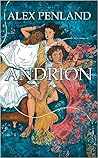
My Goodreads review of “Andrion” by Alex Penland

Andrion

Andrion by Alex Penland
My rating: 5 of 5 stars

Full disclosure: I met Alex Penland at a conference of the Science Fiction and Fantasy Writers Association. She talked about her forthcoming novella, and I offered to read it, and if I liked it, to give it a blurb. (Blurbs are short promotional descriptions of a work, usually a paragraph on the back or on the website.)

Alex had done her research into ancient Greece and the people who lived there, and I hoped she could bring the possibilities of that historic time to life.

I read ‘Andrion’ and I think she did just that. In particular, I was impressed by the emotion packed into the story, echoing the intensity of ancient Greek drama, where characters embody their emotions and express them with raw energy.

My blurb:
Ancient Greece had an open secret: its vaunted ideas of democracy and freedom never applied to women. Alex Penland captures the sights, sounds, beauty, and jostling politics of Ancient Athens. A love for that city — and other kinds of love — emboldens a young woman to do what no woman has done before: rebel, using the latest technology of Athens in this imaginative steampunk tale. Righteous anger shines in this story like a beacon.

View all my reviews

Surprise! One of my translations was published without letting me know

Copyright law is clear and simple: A translator owns the copyright to their translation. Whoever writes words in a fixed format owns the copyright to those words. It is intellectual property.

Now, translation is a subsidiary right, which is also simple but much misunderstood. Subsidiary rights involve adapting a literary work into another format. It must be done with the permission of the owner of the original work. You can’t produce a film based on a story without the express written permission of the author. You can’t publish a translation of a story without express written permission of the author.

However, the creator of the adaptation owns the rights to their own work. The author does not own the rights to the film unless that right is expressly granted to the author in writing. Similarly, the author does not own the rights to the translation unless that right is expressly granted by the translator in writing. Just because the author grants permission to the translator, even if the translator is paid for it, that does not automatically grant transfer of the copyright.

Authors can be very confused about this. Publishers and editors should not trust authors’ assertions and should practice due diligence.

So, imagine my surprise when I discovered that one of my translations is included in the anthology European Science Fiction #1: Knowing the Neighbours, published in 2021 by Associazione Future Fiction of Rome, Italy, edited by Francesco Verso. The story is “Team Memory” by Carme Torras of Spain. It’s one of fifteen short stories in the anthology.

“Team Memory” is a good story. I’m glad it has the chance to reach new readers. I hope you buy the book.

However … I feel more than surprise. This is a violation of copyright. I’ve dealt with Francesco Verso before. He asked for me for permission to publish “Francine (Draft for the September Lecture)” by María Antònia Martí Escayol for World Science Fiction #1: Visions to Preserve the Biodiversity of the Future, published in 2019. He later used it without asking in Apex Magazine. I complained to the publisher about that. It’s a great story, and I hope you read it. Buy the book! Buy the magazine!

These are not my only disappointing surprises, though, and I’m not the only translator.

A particularly egregious example of copyright infringement involves Yilin Wang, a Chinese-to-English translator, whose translations of historically important Chinese poetry were used by the British Museum (!) without permission, attribution, or compensation. When she complained, they erased her work. She crowdfunded the money to get a lawyer and reached a settlement.

This is rare, though. Translators don’t like to complain in public. They don’t want to get a bad reputation.

I care about world literature. It would not exist without translators. And yet, we can be ignored or treated as a nuisance rather than as an irreplaceable partner — even by the very people who celebrate the world literature. Francesco Verso says it very well in the introduction to European Science Fiction #1. There should be a “fair distribution of futures across the world.”

Yes, we should see the whole world reflected in literature. However, there’s not much financial reward for the translator in literary translation (sometimes not even a free copy as a thank-you). The work requires training and considerable effort, and if we’re treated like nobodies, why bother?

Beyond intellectual property law and respect for creative work, it’s simply not good business sense to leave out the translator because selling is very hard. I can’t help publicize a new book or magazine and tell people to buy it if I don’t know it exists.

We have allies, of course. PEN America has a model book contract for translations that deserves to be followed for short fiction as well. I particularly want to call attention to Paragraph 11.

11. The Translator’s name shall appear on the front of the jacket/cover and on the title page of all editions of the Translation, and in all publicity and advertising copy released by the Publisher, wherever the Author’s name appears. The Publisher agrees to print the Translator’s approved biography on the back flap of the hardcover edition, on the back cover of and/or within any trade paperback edition of the Translation, and within any electronic edition.

The Author’s Guild has a similar model contract for translation.

Yet an editor of a poetry magazine told me just last week, “A bio as a translator is certainly not standard practice anywhere.”

Publishers, editors, and authors who want to break down language barriers ought to be the first to respect, protect, and promote the value of translators’ work. World literature would not exist without translators, but somehow we seem expected to subsidize world literature with unrewarded, unacknowledged labor. And we shouldn’t complain, either.

My Goodreads review: The King of Elfland’s Daughter

The King of Elfland's Daughter

The King of Elfland’s Daughter by Lord Dunsany
My rating: 5 of 5 stars

I like to read books that I could never have written, and this century-old novel, in addition to being fundamental to modern fantasy, is known for its beautiful stylistic exuberance. Besides, when I was in Ireland in 2019, I toured Dunsany Castle and met the current Lady Dunsany (alas, she died in 2020 of covid).

At its heart, the novel is a simple story — boy meets girl, boy loses girl, boy gets girl back — but it takes place in a magical world, part of it like our own, and part of it in a domain of “twilight and dew, surrounded by the mauve and ruddy glow of the massed flowers of Elfland, beside which our sunsets pale and our orchids droop, and beyond them lay like night the magical wood. And jutting from that wood, with glittering portals all open wide to the lawns, with windows more blue than our sky on Summer’s nights; as though built of starlight; shone that palace that may be only told of in song.”

The simple story meanders to include unicorns, a witch, elves, trolls, and all manner of fantastic countryside. Elfland stands becalmed in time, wondrously strange and static in beauty, enchanting — yet not entirely enticing. Wise people do not even look in its direction. When the King of Elfland’s daughter marries the Lord of the Vale of Erl, the two parts of this wondrous world clash, and despite best intentions, they cannot coexist.

Hearts break, and sorrow has no place in Elfland. When that is finally understood, the poetic tale reaches a luminous ending. In both its style and wild imagination, the novel stands as a landmark in fantasy literature. It’s not my usual fare, but like a rich, delicate dessert, it was a treat.

View all my reviews

How Frederick Douglass really learned to read

Florida classroom guidelines for its new African American History Strand, as adopted by the State Board of Education, state that classroom instruction should include “how slaves developed skills which, in some instances, could be applied for their personal benefit.”

William Allen, who is a professor emeritus of political science at Michigan State University, defended that strand this way: “I see what Frederick Douglass meant when he described his slave mistress teaching him to read only at the beginning because his owner put a stop to it. But that small glimmer of light was enough to inspire him to turn it into a burning flame of illumination from which he benefitted and his country benefitted.”

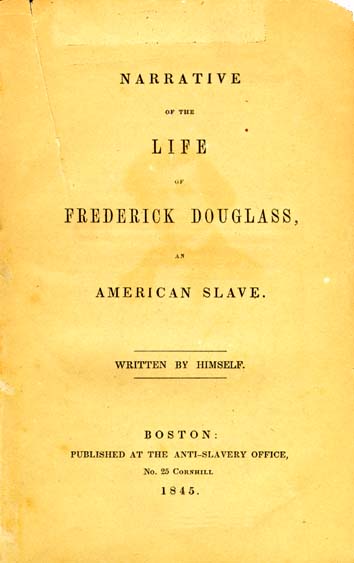
I’ve read Narrative of the Life of Frederick Douglass, an American Slave, Written by Himself (1845). It is a horrifying book, and I hope more people read it.

The book contradicts the claim that Douglass developed reading because of slavery. He learned to read in spite of slavery. If he had been free, learning to read would have been legal. Slavery specifically sought to withhold that personal benefit from him.

He recounted in Chapter VII that as a child in Baltimore, one of his mistresses, Mrs. Auld, was new to slave-owning, and “very kindly commenced to teach me the A, B, C. After I had learned this, she assisted me in learning to spell words of three or four letters.” Then her husband found out “and at once forbade Mrs. Auld to instruct me further, telling her, among other things, that it was unlawful, as well as unsafe, to teach a slave to read” and to do so “would forever unfit him [Douglass] to be a slave.”

That rebuke turned Mrs. Auld into a cruel mistress who did everything she could to keep him from learning more. “I was most narrowly watched.”

Out in the street, though, he learned at a shipyard that L, S, F, and A stood for larboard, starboard, fore, and aft.

“I immediately commenced copying them, and in a short time was able to make the four letters named. After that, when I met with any boy who I knew could write, I would tell him I could write as well as he. The next word would be, ‘I don’t believe you. Let me see you try it.’ I would then make the letters which I had been so fortunate as to learn, and ask him to beat that. In this way I got a good many lessons in writing, which it is quite possible I should never have gotten in any other way.”

At home, when no one was around, he practiced with the family’s young son’s discarded Webster’s Spelling Books. “Thus, after a long, tedious effort for years, I finally succeeded in learning how to write.”

But he had learned to hate slavery long before he learned to read and write.

Warning: What follows is sadistic brutality. In Chapter I, he recounted how, as a very young boy, he saw his aunt whipped by their master.

“Before he commenced whipping Aunt Hester, he took her into the kitchen, and stripped her from neck to waist, leaving her neck, shoulders, and back, entirely naked. He then told her to cross her hands, calling her at the same time a d——d b—h. After crossing her hands, he tied them with a strong rope, and led her to a stool under a large hook in the joist, put in for the purpose. He made her get upon the stool, and tied her hands to the hook. She now stood fair for his infernal purpose. Her arms were stretched up at their full length, so that she stood upon the ends of her toes. He then said to her, “Now, you d——d b—h, I’ll learn you how to disobey my orders!” and after rolling up his sleeves, he commenced to lay on the heavy cowskin, and soon the warm, red blood (amid heart-rending shrieks from her, and horrid oaths from him) came dripping to the floor. I was so terrified and horror-stricken at the sight, that I hid myself in a closet, and dared not venture out till long after the bloody transaction was over.”

In Chapter VIII, Douglass’s family was being split up as property after his master died. The master’s son was a possible heir, and “to give me a sample of his bloody disposition, took my little brother by the throat, threw him on the ground, and with the heel of his boot stamped upon his head till the blood gushed from his nose and ears.”

The book has eleven chapters — and many more incidents of savagery. Douglass concludes with the hope “that this little book may do something toward throwing light on the American slave system, and hastening the glad day of deliverance to the millions of my brethren in bonds.”

Nothing in the book tells how slavery personally benefitted the enslaved — or the masters. Douglass said it made them cruel and rage-filled: “Under its influence, the tender heart became stone, and the lamblike disposition gave way to one of tiger-like fierceness.” Slavery benefitted no one.