Yellow

Every flower is unique. And yet, some small yellow flowers share a common nickname among botanists: DYCs, Damned Yellow Composites. Those are plants of the Asteraceae (daisy, aster, and sunflower) family, which are common worldwide. They’re usually tenacious weeds, and they may be pretty, but they can be so alike that they’re hard to tell apart.

Sometimes botanists don’t even try. It may not matter to the local ecology exactly which species those flowers belong to. Identifying them as DYCs serves well enough except for the most rigorous scientific purposes.

Every small songbird is also unique but far too many look similar to each other. The ones that are hard to distinguish are sometimes called dickybirds by birdwatchers, and often these birds — especially warblers — have a touch of yellow.

There are more galaxies in the sky than grains of sand on Earth’s beaches, so how many stars will be standard M-class yellow stars like our own Sol? Too many to count.

Flowers, birds, stars: yellow abounds. So does ambition.

Flowers, birds, and suns all strive for more, and our universe undergoes constant change as a result. Birds compete with song. Stars create more complex matter at every generation. Imagine what a weed will be like as eternity gives it time to perfect its art. The bouquets will astound us with their sheer ambition.

Yellow means aspiration and change — changes too small and slow for us to see, yet we can enjoy their success so far: a field of flowers, a morning filled with birdsong, and a sunny day. Yellow unites them with beauty.

“Life from the Sky” at Forever Magazine

My novelette “Life from the Sky” is included in the July 2024 issue of Forever magazine. The story tells how this isn’t a good time for an alien life form, no matter how simple and harmless, to land on Earth. The story was originally published in Asimov’s magazine in 2018.

Forever is a monthly science fiction magazine that features previously published stories you might have missed, edited by the Hugo and World Fantasy Award-winning editor of Clarkesworld Magazine, Neil Clarke. The July 2024 issue also includes “The Gods Have Not Died in Vain” by Ken Liu, and “Unauthorized Access” by An Owomoyela. Cover art by Ron Guyatt.

You can by it from Weightless Books: Forever Magazine Issue 114.

(Photo: Me trying to steal Neil Clarke’s Hugo Award at the 2024 Glasgow Worldcon.)

***

If you can read Spanish, you can buy the Spanish-language version of my novelette “Who Won the Battle of Arsia Mons?” [“¿Quién ganó la batalla de Arsia Mons?” translated by Virginia Sáenz] published in the anthology Excelsius 2024. I attended the Celsius 232 literary festival for science fiction, fantasy, and horror in Spain in July, where an anthology of works by writers attending the festival was created as a premium for its Patreon members. It is now on sale to the public, and it includes stories by Angela Slatter, Beatriz Alcaná, Cat Sparks, Charlie Jane Anders, Fulanito Pingüino Escritor, Guillem López, JV Gachs, María Zaragoza, Santiago Eximeno, and Thomas Olde Heuvelt.

“Who Won the Battle of Arsia Mons?” was originally published (in English) at Clarkesworld Magazine in 2017 (available there in print and in audio). It tells the story of the stupidest thing I could think of for robots to do on Mars.

(Photo: Meeting readers at Celsius. The festival was full of people eager to read!)

I’ll be at bookstores in Madrid on Friday and Saturday

If you happen to be in Madrid, Spain, this week, so am I!

If you speak Spanish, come to Estudio Escarlata at 7 p.m. Friday, July 26, at calle Andrés Mellado 52. As you may know, Semiosis is now available in Spanish — with a wonderful translation by Rafael Marín.

If you prefer English, come to the Secret Kingdoms bookstore at 8 p.m. Saturday, July 27, at calle Moratín 7. I’ll be talking about my books, naturally — followed by drinks and snacks.

As you may know, I lived in Madrid from 2000 to 2016. I’m excited to be back among friends in the city I love!

An excerpt from ‘Usurpation’

Here’s an excerpt from the novel Usurpation, which will be published in October in hardback, ebook, and audiobook (in preparation). You can preorder your copy now.


CHAPTER 3 – Year 2885 CE – Pax Institute, Bayonne, France – LEVANTER

She has arrived, the new director of the Pax Institute, and I will be destroyed. She confirms her credentials with the building and walks through the front door.

She is going to take my place. She will find out that I, Levanter, am not a human being. Foolishly, I used my real name to declare myself director, the name Mirlo gave me three centuries ago. He planted seeds he brought from the planet Pax, and I and my two sisters now grow here at the institute’s garden. My name is in the record’s big clumsy library in too many places to erase before she accesses the system. It is even on a sign in the garden in front of my main stalks. She will discover that Levanter is a rainbow bamboo.

No one knows we are intelligent. No one can know. Bamboo grow all over the Earth, and humans would kill us all if they knew. Not all humans are killers, but some are, and they have proven themselves efficient.

Meditate like the stars

How do you meditate? Sitting still, eyes closed? That’s one way to do it: We can imagine ourselves serene like the stars overhead, moving in stately, measured rhythms. We breathe in and out, and they rise and set.

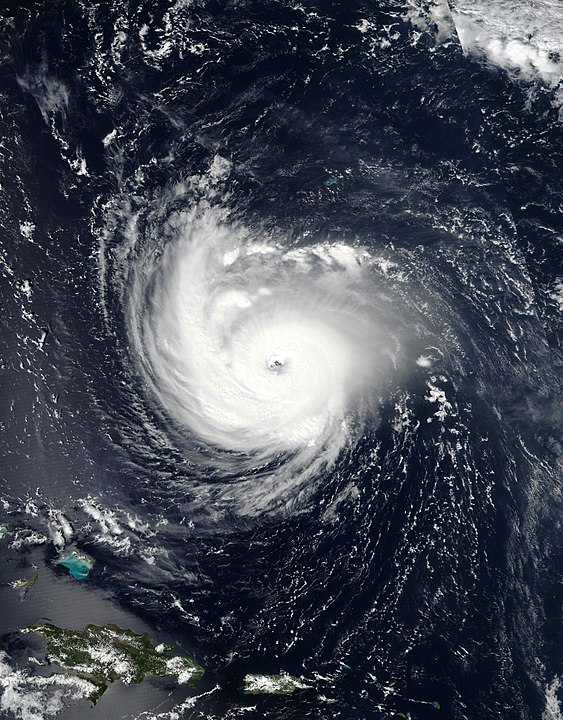
Or we could meditate like the stars as seen from another point of reference, dashing to and fro frenetically. Our Sun moves at 43,000 miles per hour. Nearby Barnard’s star is moving away from us at 200,000 miles per hour, while a star called Ross 128 is moving toward us at 69,000 miles per hour. Stars race through the sky, and they outnumber all the grains of sand on all our beaches. Their heavenly haste creates the galaxies that fly like hurricanes across the cosmos.

You can sit still to meditate. Or you can emulate a star and race like a cannonball from place to place, tugged throughout your journey by bodies as small as a planet or as large as the black hole at the center of a galaxy. Your course will be constantly modified by outside forces as you career past them.

Movement is beauty. Speed is ecstasy. Stars never travel alone and never make the same journey as their neighbors — and here on Earth, every moment of their voyages are tracked with scientific awe.

You can be like them. Savor tomorrow morning’s mad rush. Imagine yourself as a star while you move fast and phrenetic, your destination subject to constant influence and change.

Meditate on your blazing, ecstatic celerity toward parts unknown. You will be heavenly.