This flash fiction piece took second place in the 2002 Parsec Short Story Contest.
–
The Souvenir You Most Want
by Sue Burke
Miguel smiled at the tourist, a conspicuously glum young man. He had just stepped into the shadow cast by the thatched roof of Miguel’s market stall in San José, Costa Rica. The plain merchandise, gray granite spheres, attracted few customers, so Miguel was pleased to see him and picked up a stone the size of a large grapefruit. The tourist looked at it but did not remove his sunglasses.
“This,” Miguel said, still smiling, “is a true mystery of the jungle, the thing you most want. Many tourists are happy to leave the market with common things like carved wood boxes or tee-shirts. But that is not why you have come. You want something special.”
The tourist said nothing, but he took off his sunglasses. Miguel heard the young man’s troubles in the same way he heard the voices of the stones. But the stones were happy.
Miguel set down the sphere. “You can touch it.”
The tourist’s fingers twitched, but he did not reach out.
“These stones,” Miguel said, “are of the kind the Diquís Indians made for a thousand years. You have seen them in parks or museums, some as tall as you, no? And I will show you one more stone.”
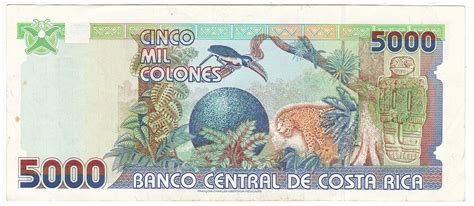
He reached into his pocket for a five thousand colones bill, a crisp new one he kept for this purpose, and held up the picture on the back of the money: in the Costa Rican jungle, a Diquís sphere too large for one man to lift rested near a toucan as a jaguar prowled nearby. It was beautiful, and it might be real.
The young man brushed his fingertips against Miguel’s stone as if it might sprout teeth and bite.
“Why did they do it?” Miguel said. “What can the spheres mean that the Indians worked so hard to make them? The Diquís are all dead. We do not know.”
The tourist’s eyes narrowed. In another moment, he might turn away, and that would be a misfortune, Miguel thought, because the stones could do so much.
“We do not know,” he said quickly, “and yet it remains true, whatever they mean. These stones tell me they are the moon, and I think the moon is happier than the sun. The moon changes, she disappears, she moves in day and night, for she is free. You had hopes, but you think the jungle did not change anything for you.”
The young man shook his head almost imperceptibly.
“It is not too late,” Miguel said.
From across the market, a woman yelled, “John, would you hurry up?” The tourist closed his eyes, sighed, and began to put his sunglasses back on, then stopped.
“This stone,” Miguel said, “is twelve thousand colones, or fifty American dollars.”
The tourist looked at the sphere, his lips moving silently. He stood up straight. He pulled out his wallet and counted out the cash, and Miguel solemnly handed him the stone. As the young man turned to leave, he waned into a quarter, then a crescent, and finally disappeared for a moment before he slowly came back into view.

 Sue Burke