 What goes on at science fiction conventions? Here’s my report for Windycon 45, held earlier this month. This is a fan-run literary convention that focuses on books and authors rather than on TV and movie shows and stars. I prepared this report for the fanzine Alexiad.
Windycon 45
November 9 to 11, 2018
Westin Lombard Yorktown Center
Lombard, Illinois
Friday, November 9
Since the hotel is located out in the suburbs southwest of O’Hare Airport and highly inconvenient to mass transit, I talked my husband into dropping me off on his way to work. By coincidence, the ride coincided with Chicago’s first snowfall and took more than an hour. (A friend kindly gave me a ride home on Sunday.) The hotel provided a very early check-in, and the 14th floor offered a fine view as big snowflakes fell onto Yorktown Center’s mall roofs and parking lots. I relaxed in the room until things got busy in the late afternoon.
Registration went smoothly, and after chatting at some fan booths, I attended my first panel, “Flash Fiction for Fun and Profit,” which offered useful hints for how to write and sell very short stories. The next one, “And Now for Something Completely Different,” featured panelists who weren’t sure what to do with the topic: “A discussion of unique and unusual genres in science fiction, graphic novels, and comics.” Instead they talked about marketing categories and how nothing can be completely different and new, which isn’t really a problem. As one panelist pointed out, “You don’t go to a play by Shakespeare to find out how it ends.”
The opening ceremony at 7 p.m. introduced the convention’s theme, Unlikely Heros, and the guests of honor: Faith Hunter, author; Galen Dara, artist; Kevin Roche, costuming (also the outgoing Worldcon chair, sporting a giant zebra-striped mohawk); Jen Midkiff, music, Bobbi Armbruster, fan; Andrew Trembley, toastmaster; and additional guests including Mike Resnick, Alex and Phyllis Eisenstein, Eric Flint, and Jody Lynn Nye. The charity, an annual feature of Windycons, was the DuPage County Habitat for Humanity.
The convention featured a wide variety of panels, concerts, filking, children’s programming, video and board game rooms, book clubs, an ongoing LED kit workshop (learn to solder!), costuming workshops (make chain mail!) and a Masquerade costume contest. A Klingon Assault Group operated a jail-and-bail to raise funds for Habitat. The Royal Manticoran Navy, which is the Honor Harrington Fan Association, raffled off games and a Kindle to fund roof repairs for the Rantoul, Illinois, public library.
An 8 p.m. panel discussed “Evil Computers” and concluded that the real evil lay in malicious programmers. I wandered around for the next hour, then moderated a panel on “Science in the Kitchen.” We intentionally tiptoed around the issue of GMOs and instead talked about such topics as industrial versus home cooking, vat-grown meat, and urban hydroponics.
By then most organized activities were over, so it was time to roam from party to party on the top three floors of the hotel and eat, drink, and chat. The spacious con suite also served free beer and wine. I went to bed after midnight, but many people stayed up later.
Saturday, November 10
I spent Saturday morning in the Writer’s Workshop offering advice (sage, I hope) to up-and-coming authors. The three in my group had sound stories, although I recommended a clearer emotional focus.
In the Dealer’s Room, I bought a pair of earrings for myself and a shirt for my husband featuring the words “Still Flat, We Checked” embroidered over a NASA-style red, white, and blue meatball. Through sheer force of will, I tried to avoid buying a book or two, but eventually I came home with one. In the Art Show, I bid on a piece and took a selfie with the Tiki Dalek that Kevin Roche brought, a tropical beach version of the Doctor Who nemesis.
After a panel on “Villains, Monsters, and Motherhood,” I took a lunch break in the Con Suite, which was serving Chicago hot dogs with the traditional poppy-seed buns and all the “dragged through the garden” toppings, as well as ketchup for clueless out-of-town guests (an authentic Chicago hot dog does not use ketchup). In the line, I met a man who had attended every single Windycon since 1973. “It’s like family,” he said. That’s something a lot of other people said during the weekend, from con co-chair Daniel “gundo” Gunderson on down.
The committee for Chicago’s 2022 Worldcon bid met to ratify its bylaws, elect its board and officers, and review progress; a downtown hotel looks likely. I attended a couple of panels, “Which Witch Is Yours?” and “Heroes East vs. West.”
I also participated in a couple of panels. At “¿Cómo Estás? Translation Challenges,” we discussed odd differences between various languages. At “Animal Typecasting,” we compared real animals to the compliant and stereotypical animals often seen in media, the kind of misrepresentation that inspired some people who saw the film Pocahontas to get baby racoons as a pet, with disastrous results.
I attended the Writers and Donuts gathering to chat with other writers and eat donuts (provided by Richard Chwedyk), then it was time for the serious business of visiting and comparing parties. I met a 30-year-old woman who had been coming to Windycon her whole life: her parents met there, they brought her as an infant, and she met her husband there, so for her the con and her family are inseparable. The Chicago 2022 convention bid party’s entertainment included an origami sheet that could be folded (with a lot of complex steps) into a rocket (befitting the bid’s slogan, “Take to the Stars”), but even with my still being pretty sober and having experienced help, my wrinkled, misshapen rocket would have crashed at takeoff.
Sunday, November 11
I learned my Art Show bid was outbid, which was sort of okay, since it was a charity auction item and the funds went to Habitat for Humanity. At the panel “The Sequel Is Finally Here!” Eric Flint provided his usual phlegmatic and wise commentary. (I ought to buy one of his books and see if I like his writing as much as I like him.) “Fantasy Chicago” discussed the weird things in the city, including (semi)secret tunnels between buildings, ghosts, and some very odd museums.
I was supposed to be a panelist on “Autonomous Cars: awesome or awful?” but the moderator didn’t show up and, to my surprise, things took a loud, contentious turn even before the panel started. So I proclaimed myself moderator and spent the hour using the classroom management skills I learned teaching teenagers to smooth out the debate, making order and fun out of chaos and yelling. Both the panelist and the audience were evenly and deeply split between feasible versus unfeasible, safe versus unsafe, and an improvement versus an impoverishment to people’s lives.
It was almost time to go home. At the closing ceremony, gundo announced that through various means, more than $1,700 had been raised for Habitat for Humanity. Galen Dara, whose art decorated the program book and Windycon website, won Best in Show in the Art Show. Party awards were selected by popular vote: Best Food and Snacks, Royal Manticoran Navy; Best Alcoholic Drink, Bar Fleet; Best Non-Alcoholic Drink, Bar Fleet; and Best Party, Moulin Rouge.
From what I could tell, everything had gone smoothly. I had fun, met interesting people, learned new things, drank tasty drinks, sold a couple copies of my book, and relaxed.
Next year’s Windycon will be November 15 to 17, again at the Westin Lombard, with the theme Space Opera. Guests of honor are Elizabeth Moon, author; Mitchell Bently, artist; Chris Barkley, fan; Harp Twins, music; and Lee Martindale, toastmistress.
 Oxford’s word is toxic. It doesn’t get much worse than that: toxic chemical, masculinity, substance, gas, environment, relationship, culture, waste, algae, and air. Oxford explained its choice this way:
 Dictionary.com’s choice, misinformation, doesn’t bring holiday cheer, either. Why choose it? It’s editors said:
 Merriam-Webster’s word also reflects our preoccupations: justice. “It was a top lookup throughout the year, with the entry being consulted 74% more than in 2017,” the dictionary’s editors said.
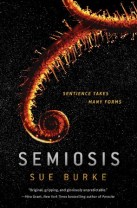 My novel Semiosis on sale until January 1: only $2.99.
 On Saturday, December 1, from 1 to 3:30 p.m., three Chicago authors will be talking with astronomers at the Adler Planetarium about our inspiration from the stars. I’m one of the authors.
