Here’s a game I’ve played with a few writing classes. These are the opening paragraphs to novels that were made into films. Do you recognize them?
For writers, this exercise offers the chance to study what makes these openers successful. As we write, with the very first words we make promises to the reader.
What do these first words tell you about the book? What kind of narrator is telling the story? How much do you know about the setting, characters, and likely conflict? What should the reader expect going forward?
The opening paragraphs:
1. [He] was drunk. He was eloquently drunk, lovingly and pugnaciously drunk. He leaned against the bar of the Old Home Sample Room, the most gilded and urbane saloon in Cato, Missouri, and requested the bartender to join him in “The Good Old Summer Time,” the waltz of the day.
2. An angry man — there is my story: the bitter rancor of the prince that brought a thousand disasters on the opposing army. Many a strong soul it sent to the underworld, and left the heroes prey to vultures and dogs, while the will of a god moved on to fulfillment.
3. Current-bourne, wave-flung, tugged hugely by the whole might of ocean, the jellyfish drifts in the tidal abyss. The light shines through it, and the dark enters it. Borne, flung, tugged from anywhere to anywhere, for in the deep sea there is no compass but nearer and farther, higher and lower, the jellyfish hangs and sways, pulses move slight and quick within it, as the vast diurnal pulses beat in the moondriven sea.
4. The village of Holcomb stands on the high wheat plains of western Kansas, a lonesome area that other Kansans call “out there.” Some seventy miles east of the Colorado border, the countryside, with its hard blue skies and desert-clear air, has an atmosphere that is rather more Far West than Middle West. The local accent is barbed with a prairie twang, a ranch-hand nasalness, and the men, many of them, wear narrow frontier trousers, Stetsons, and high-heel boots with pointed toes.
5. Your father is about to ask me the question. This is the most important moment of our lives, and I want to pay attention, note every detail. Your dad and I have just come back from an evening out, dinner and a show; it’s after midnight. We came out onto the patio to look at the full moon; then I told your dad I wanted to dance, so he humors me and now we’re slow-dancing, a pair of thirty-somethings swaying back and forth in the moonlight like kids. I don’t feel the night chill at all. And then your dad says, “Do you want to make a baby?”
6. I’m pretty much fucked. That’s my considered opinion. Fucked. Six days into what should be the greatest two months of my life, and it’s turned into a nightmare. I don’t even know who’ll read this. I guess someone will find it eventually. Maybe a hundred years from now. For the record … I didn’t die on Sol 6. Certainly the rest of the crew thought I did, and I can’t blame them. Maybe there’ll be a day of national mourning for me, and my Wikipedia page will say, “Mark Watney is the only human being to have died on Mars.”
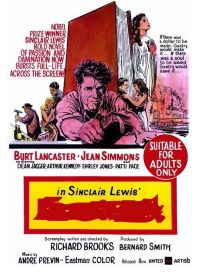
1. Elmer Gantry by Sinclair Lewis (1927), film in 1960. A confidence man and a female evangelist sell religion to small-town America. The opening paragraph tells us that the story takes place in the Midwest in the 1920s. It suggests a judgmental narrator and gives us a glimpse into the personality of the protagonist, an outgoing man of questionable character. The movie starred Burt Lancaster and won three Academy Awards.
2. The Illiad by Homer (8th century BCE), film Troy in 2002. Not exactly a novel, this is still a major work of fiction that defined a culture and continues to influence literature to this day. The opening words promise an exciting story about war and blood involving high-born men who must deal with divine intervention. The narrator is outside the story but actively participates in the telling.
3. The Lathe of Heaven by Ursula K. LeGuin (1971), TV movies in 1980 and 2002. A man’s dreams change reality, and the novel opens in a dream, followed by a terrifying dream, and then he wakes up in an impoverished, war-torn world. The opening promises an immersive, lyrical story with a narrator who reports the story but stays out of it.
4. In Cold Blood by Truman Capote (1965), films in 1967, 1996, and 1993. Not exactly a novel, instead this is a pioneer work of creative non-fiction, using all the resources of fiction to tell a story based on fact. Specifically, it recounts the 1959 savage murder of a family in Holcomb. At the time, the nation was shocked that such senseless bloodshed could take place in such a quiet little town, and opening with a description of the place reinforces the trauma of what eventually happens.
5. “Story of Your Life” by Ted Chiang (1998), film Arrival in 2016. The novella, unlike the movie, focuses on a woman coming to terms with her daughter’s early death. The narrator is the mother, and she’s telling the story to her daughter as if the daughter were still alive, which becomes thematically important within the context of the story. The opening paragraph establishes the tone and frame of the narration.
6. The Martian by Andy Weir (2011), film in 2015. From the start, we know this is going to be a first-person narration, and that the narrator casually drops the F-bomb. He also maintains a pretty good sense of humor for a man who’s reasonably sure that he’s going to die. We know by the end of the opening exactly what the conflict is: man vs. nature, in this case Mark Watney vs. Mars.