A chat at SciFiScavenger

Over at SciFiScavenger on YouTube, I spend a half-hour chatting with host Jon Jones about plants, Usurpation, and my other books, and I share some recommendations for books I love.

Here’s the list — by the way, you can find more of my book opinions at Goodreads.

Life Beyond Us, edited by Julie Nováková, Lucas K. Law, and Susan Forest. The European Astrobiology Institute created this anthology of 27 short stories by top authors about first contact with life unlike our own. Each story is matched with an essay by a scientist. Exciting and educational.

Children of Time, by Adrian Tchaikovsky. If you liked Semiosis, you’ll like this. Similar theme, lots of spiders, and a transcendent ending.

Meet Me in Another Life, by Catriona Silvey. If you like romance novels, this is the science fiction novel for you. Two people keep meeting, but why? I wept like a baby at the ending.

Langue[dot]doc 1305, by Gillian Polack. If you like historical fiction, this is the science fiction novel for you. Scientists travel back in time to France in 1305, and they underestimate the people who live there. Worse, they don’t listen to the historian traveling with them.

Babel, by R.F. Kuang. As a translator, I found the magic system fascinating and meticulously constructed. Better yet, the story is solidly anchored in historical fact.

17776: What football will look like in the future, by Jon Bois and Graham MacAree. This is a daring multimedia SF experiment, and not really about football. I’ll never forget the tragic death of the heroic light bulb. Find it here: https://www.sbnation.com/a/17776-football

The Marlen of Prague: Christopher Marlowe and the City of Gold, by Angeli Primlani. Magic is the only thing that might save Europe from the Thirty Years’ War. The author clearly understands Prague and the theater.

In Defense of Plants, by Matt Candeias, PhD. How can you resist a book with an entire chapter about “The Wild World of Plant Sex”?

The Great Believers, by Rebecca Makkai. Not SFF at all, sorry, but I live in Chicago, and this novel accurately reconstructs the disaster of AIDS in the gay community in the 1980s. You might consider it historical fiction.

Deep Dish reading on Thursday

You’re invited to the Deep Dish speculative fiction reading on Thursday, October 3, at 6:30 p.m. at Volumes Bookcafe, 1373 N. Milwaukee Ave., Chicago, sponsored by the Speculative Literature Foundation. I’ll be one of the rapid-fire readers.

***

The launch of my novel Usurpation will be at 6:30 p.m. Wednesday, October 30, at Volumes Bookcafe. Everyone’s invited! More details here.

***

At Goodreads, I reviewed The Word, by JL George, a science fiction novel that shows how the power of compassion can fuel a rebellion in a dehumanized near-future Britain.

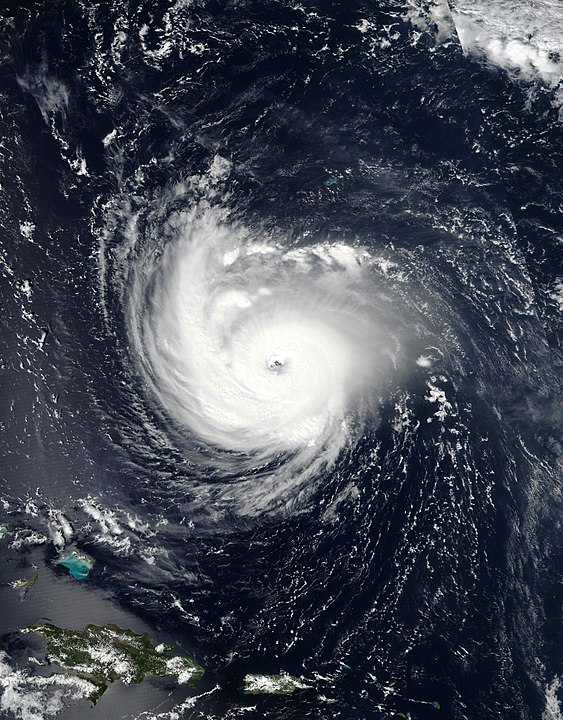
Hurricanes take a toll

In 2018 I was traveling as Hurricane Florence was hitting the East Coast. One morning I was in Michigan eating breakfast at a Best Western motel. I was up very early, and everyone else in the breakfast room was obviously a tradesman: construction site workers and truck drivers, strong men used to going from job to job and working with their hands.

Television screens on the walls played the CNN morning news, and when it ran a segment on Hurricane Florence, the room went silent and every man watched somberly. These men, or their friends and coworkers, might be called on to haul supplies and repair or rebuild the storm’s damage as their next job. They looked grim, not joyful, at the prospect of plentiful work. Those jobs would bring them face to face with loss and grief, and the future might be hard on their hearts as well as their hands.

Autographed copies of “Usurpation”

If you want an autographed copy of my next novel, Usurpation, and you won’t see me in person, you can order it through Volumes Books, a locally owned Chicago bookstore. The book comes out on October 29. International shipping can be arranged individually.

Find it at this link: https://volumesbooks.com/book/9781250809162

The official launch of the novel will be at 6:30 p.m. Wednesday, October 30, at Volumes Bookcafe, 1373 N. Milwaukee Ave., Chicago. Everyone’s invited! More details here.

Do your neglected houseplants want revenge?

Do your houseplants hate you? No, they don’t, no matter how much you neglect them. In fact, they’re praying to their green gods for your prosperity. They’ll struggle on as best they can, offering you beauty and silent non-judgmental companionship in exchange — they hope — for more-or-less regular watering and a spot near sunlight.

Plants need you, no matter how inconstant you are. A lot of the vegetable kingdom depends on animals, in fact, and plants haven’t always chosen well.

Consider this story of apples and oranges — osage oranges, to be exact.

First, the apple: colorful and tasty. Many animals love sugary treats. Apple trees make sweet fruit for us to munch on so we’ll throw away the core, and the seeds can germinate in a new place. (They don’t trust us much, though. They’ve made their seeds too bitter to eat so we’ll do our job right.)

How has this strategy worked out?

Apples originated in central Asia, and ancient peoples brought them east and west. When apples reached North America, they found a champion named John Chapman, “Johnny Appleseed,” who brought orchards to the United States frontier. In the 20th century, with more human help, the trees conquered large portions of Washington State. Now, 63 million tons of apples are grown every year worldwide, much of them in northern China.

From the apple trees’ point of view, it doesn’t get better than this. They grow worldwide and get lots of tender loving care. Human beings have served them very well.

In contrast, there’s the osage orange tree. It also produces fruit: green, softball-sized, and lumpy, full of seeds and distasteful latex sap. No one eats it. The tree originated in North America and once grew widely, but by the time European colonists arrived, its territory had shrunk to the Red River basin in eastern Texas. How did it fail?

The fruit had appealed to the Pleistocene’s giant ground sloth, a member of North America’s long-lost megafauna. The sloth scarfed them down, not chewing much, and the seeds traveled safely through its digestive system, emerging in new territory. Then, 11,000 years ago, human beings came to North America and couldn’t resist the allure of a couple of tons of meat per slow-moving beast. Giant ground sloths disappeared, and six of the seven species of osage orange also went extinct.

Why haven’t the remaining trees adapted their fruit to contemporary tastes? Because trees live for a long time, and 11,000 years ago for them is like the High Middle Ages for us. Lucky for them, humans find their wood useful and rows of the trees make effective windbreaks, so they currently grow across the United States and the world.

Still, useful wood isn’t much to offer the animal kingdom. Plants usually bribe us with food, the way that prairie grass entices grazers like bison to clear its domain of weeds. The bison nibble away weeds at the same time they munch on tasty grass leaves, which grass plants can easily replace. There used to be a lot more bison in North America, though. This strategy is starting to look shaky.

Flowering plants give bees nectar in exchange for hauling pollen from flower to flower, but bees seem to be having a rough time these days, too. If they go extinct, both wild and domestic plants are in deep trouble.

Plants find animal partnerships tempting. We’ll work hard for a fairly low price. But animals are unreliable and short-lived as individuals — and too often as entire species.

Back to your houseplants. Many of them likely originated in tropical rainforests. Your living room resembles a jungle: warm, reasonably humid, and moderately lit. Growing in confinement there isn’t such a bad life.

You, on the other hand, are fragile, distractible, hyperactive, and a bit murderous of your own kind as well as other species. Have your houseplants fallen into good hands? Can apples rely on us, and for how long? Are osage oranges one more extinction away from their own disappearance?

Your houseplants suffer from existential angst. Food is love, and so is fleeting beauty. They give their all for you. Go water them, offer reassurance, and consider what you owe to plants. You — and other species — need to be there for them now and in the future. Make them happy. Survive.

***

(This article originally appeared at the Tor/Forge blog.)