
This fall, Merriam-Webster.com updated its dictionary with 690 new words. One of those words is nyctinasty, a noun meaning “plant movement (such as the closing of a flower’s petals or the reorientation of a leaf’s position) that occurs in response to changes in light intensity (such as the onset of darkness) and that typically involves changes in cellular turgor: the nastic movement of the parts of some plants that occurs in the absence of a directional stimulus and that is associated with the plant’s circadian cycle.”
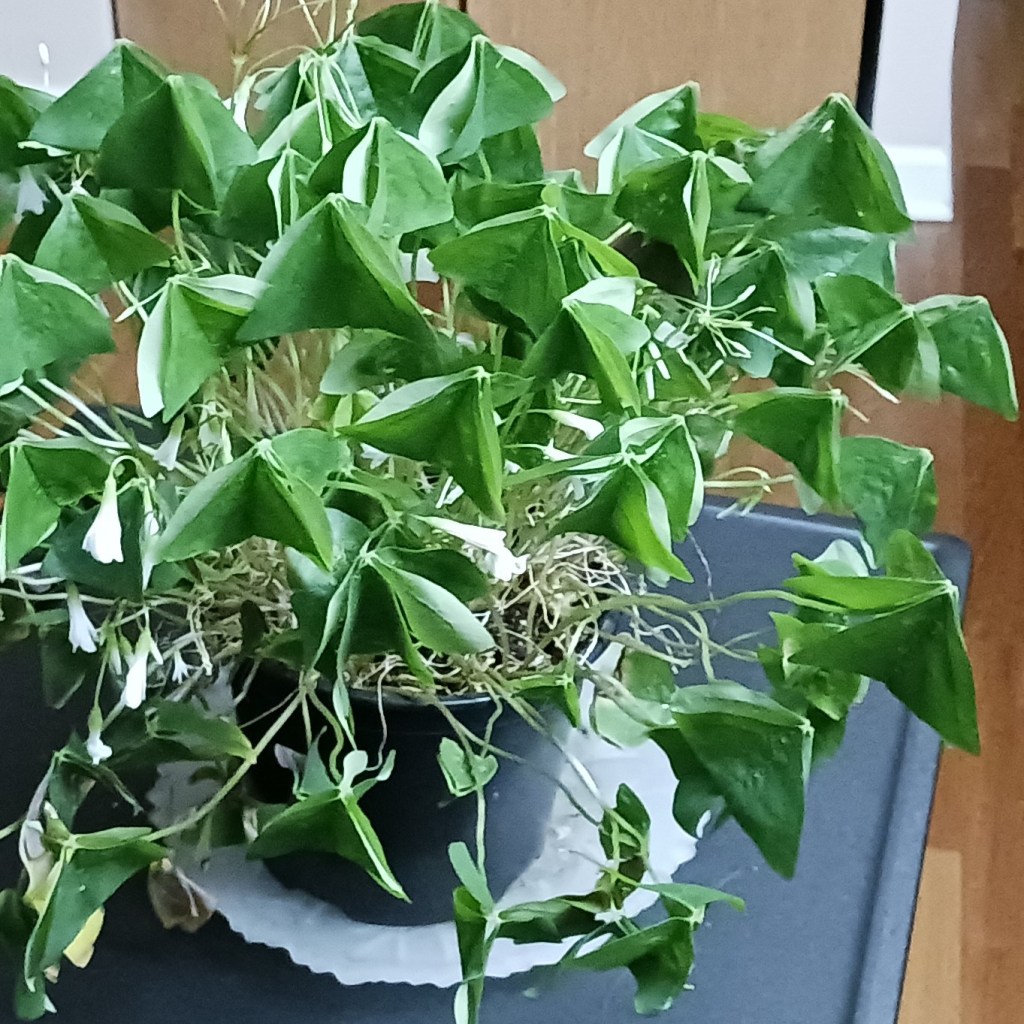
Basically, it means that the plant folds up parts, like leaves and flowers, at night. The plant snuggles up and goes to sleep. The prayer plant (Maranta leuconura) is one example. Other common nyctitropic plants are some species of Oxalis, also known as wood sorrel or false shamrocks. They’re often sold around St. Patrick’s Day in the United States.
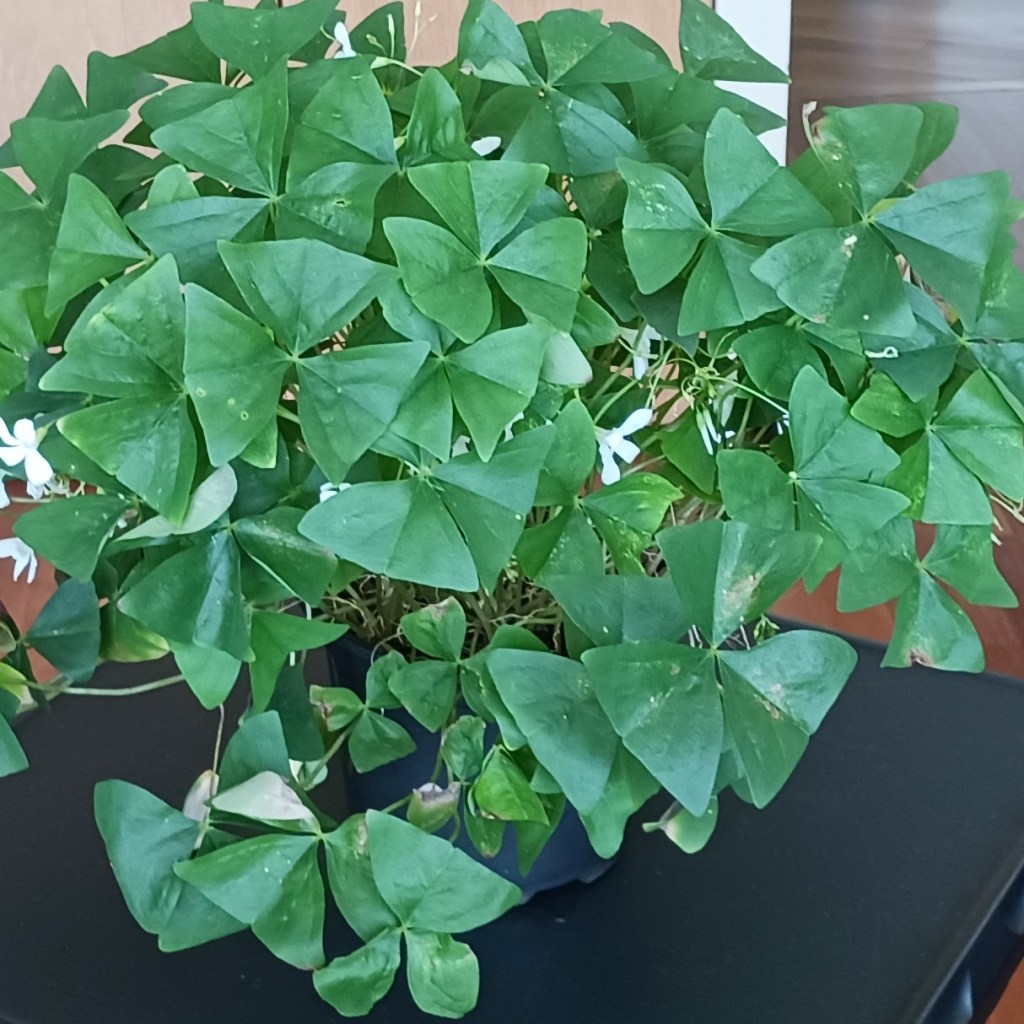
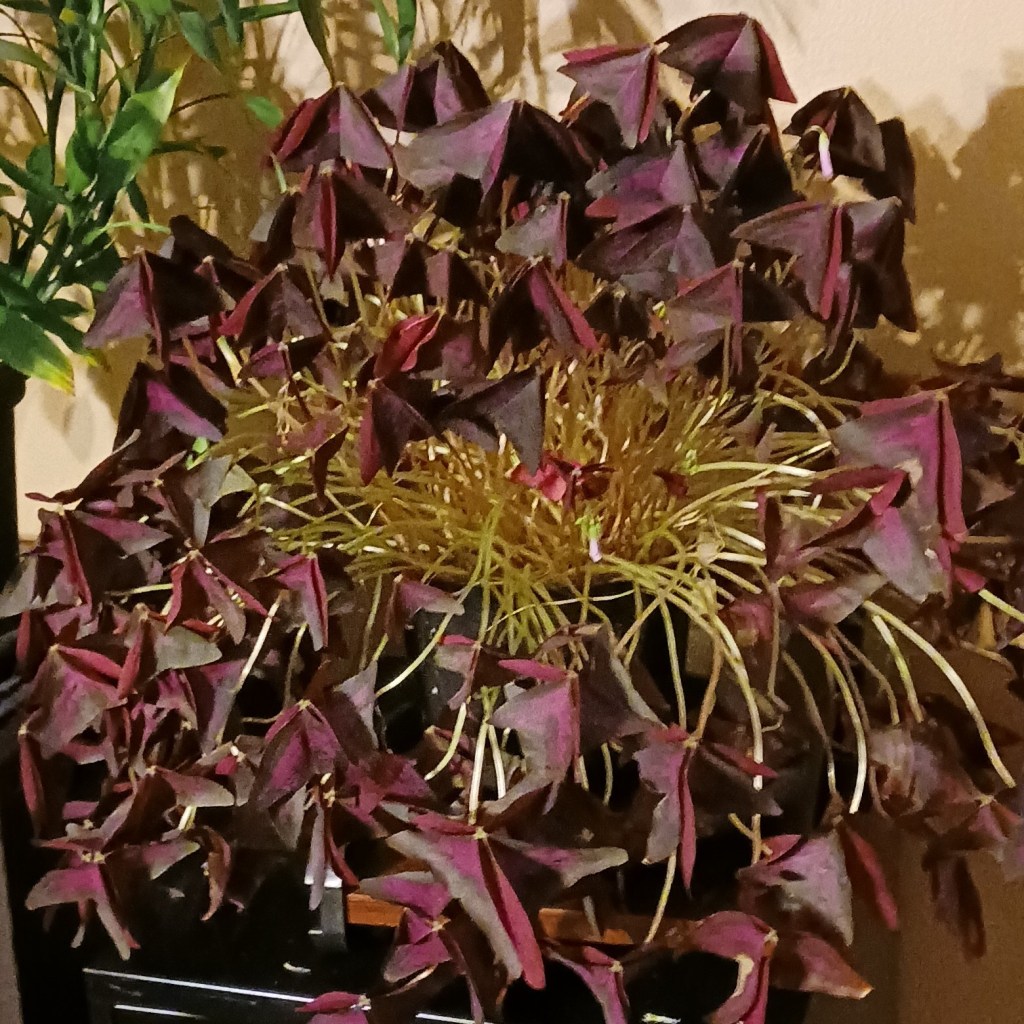
St. Patrick’s Day sales are how I got the two plants shown in the pictures, Oxalis triangularis (the purple one), and Oxalis regnellii, also called Oxalis triangularis ssp. papilionacea (the green one). The difference is day and night: plants on the move.
The word has been around in botanical circles for a long time. Merriam-Webster decided that nyctinasty isn’t a niche word anymore. It’s now safe for non-scientists to use, so use it wisely and often.

 Sue Burke